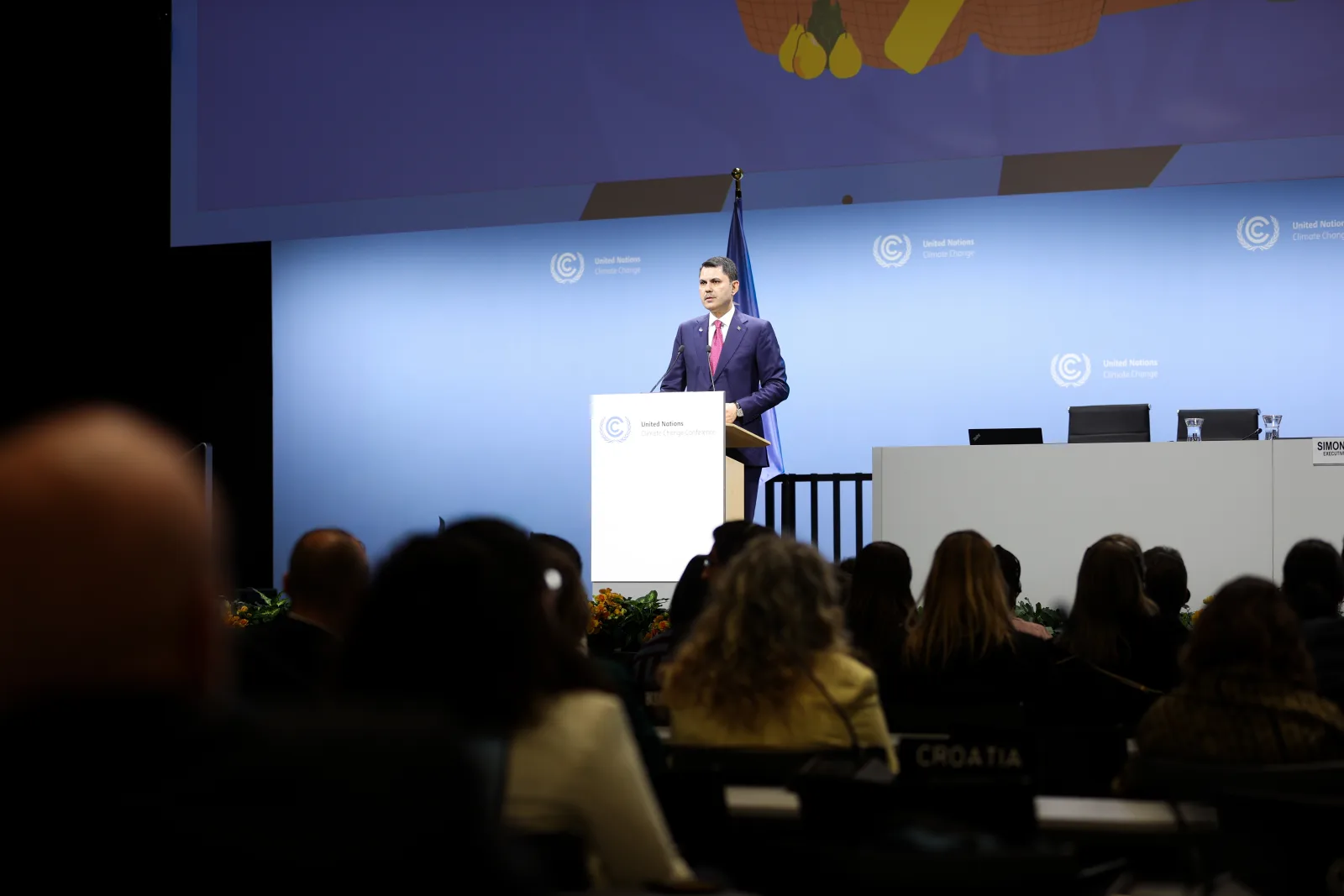
Delivered by COP31 President-Designate H.E. Murat Kurum at the Bonn Climate Change Conference, setting out ten priority themes and the Presidency's global goals on the road to Antalya.
Your Excellencies, esteemed colleagues, dear friends,
I am very pleased to be here in Bonn today to share the COP31 Action Agenda with you. On our journey to COP31, I extend my gratitude and respect to all of you for your unwavering support for the future of our world. Welcome.
Dear friends, the Action Agenda is the driving force behind implementation. As the COP31 Chair, we operate with an open and predictable approach that leaves no room for surprises. In line with this approach, we have consulted with you throughout the year.
We consulted at the Japan-Brazil Dialogue, the Petersberg Climate Dialogue, and the first International Energy Agency High-Level Dialogue. We listened to you at the Santa Marta Summit, the Baku World City Forum, and the Copenhagen Climate Ministerial Meeting.
The Action Agenda I will share today bears the mark of these early contacts. Here in Bonn, we want to further expand this circle of consultation. Our aim is to make our agenda more mature, more inclusive, and stronger together.
Dear friends, we built COP31 on dialogue, consensus, and action, with contributions from our stakeholders. We positioned this approach as "The COP of the Future," with an implementation-oriented vision. At the same time, we want to transform climate commitments into concrete actions, and actions into measurable results. The COP31 Action Agenda aims to strengthen partnerships, further develop practical solutions, contribute to implementation, and leave a lasting legacy.
In building this lasting legacy, we are working closely with our Australian friends. In particular, we have a strong working relationship and dialogue with my dear friend Chris Bowen, and I thank him in your presence. We are building on the COP29 Baku process and the Global Climate Action Agenda launched at COP30 Belém.
In this context, we identified ten priority themes under the COP31 Action Agenda. In determining these themes, we did not simply choose topics. We focused on the world's most pressing needs, the common challenges nations face in practice, and the areas where COP31 can leave a lasting legacy.
To support the transition to a circular economy, we have prioritized zero-waste approaches and methane reduction, because waste is no longer only a matter of environmental management but one of the areas where the fastest results in climate action can be achieved. A fair and powerful transition depends on access to secure energy, and so we have prioritized clean energy and electrification to ensure sustainable and secure energy for all. To transform our food systems and build a resilient future for our farmers, we have made food security and sustainable agriculture a top priority.
To increase sustainable competitiveness and achieve our climate goals, we have prioritized green industrialization, because lasting results cannot be achieved if production, trade, and employment remain outside this transformation. To protect coastal and marine ecosystems, we have addressed oceans and seas as a separate theme, central as they are to climate balance, food security, and the livelihoods of millions of people. And we have prioritized climate-friendly, resilient cities to create safe living spaces for everyone, because the effects of climate change are most visibly felt in cities, neighbourhoods, and people's daily lives.
To make the most of the energy, enthusiasm, and productivity of young people, we have placed youth participation at the heart of our Action Agenda, in the belief that young people should not only be the stakeholders of the future but also partners in finding solutions for today. Considering the impacts of the climate crisis on human health, public services, and societal resilience, we have prioritized dynamic and resilient health systems that can anticipate climate-related shocks, adapt to them, and recover quickly. We will also support cross-sector collaborative actions to build stronger synergies between climate change, biodiversity, and land degradation, and introduce an additional support system to strengthen the implementation of National Contribution Declarations and turn commitments into tangible results.
The fundamental approach of COP31 is clear: not to produce headlines, but to accelerate implementation; not to declare intentions, but to achieve results. We want to make the results of climate action tangible in cities, fields, industry, energy systems, schools, hospitals, and in people's lives.
"The fundamental approach of COP31 is clear: not to produce headlines, but to accelerate implementation; not to declare intentions, but to achieve results."
Dear participants, as you know, Türkiye experienced two major earthquakes on the same day in 2023. After these earthquakes, which were called the "Disaster of the Century," we focused directly on the target while maintaining a culture of consultation with all sectors. Thanks to the strong will of our President and the coordination and intense efforts of our Ministry, we rebuilt 455,000 homes in just two years, bringing eleven provinces back to life. Just as we conducted a multi-layered, rapid, and results-oriented reconstruction after the earthquake, we are acting with the same understanding and determination in the COP31 process.
We conducted a seamless process that brought together stakeholders from different sectors through face-to-face consultations, thematic working groups, international partnerships, and an open digital platform. We systematically incorporated feedback from national and international stakeholders into the development of the COP31 Action Agenda, and we will continue to work shoulder to shoulder with our international partners. As the COP31 Chair, we will support joint initiatives under the ten priority themes by providing resources, visibility, and political weight, making the work of partners and Activation Groups visible and strengthening the momentum for implementation.
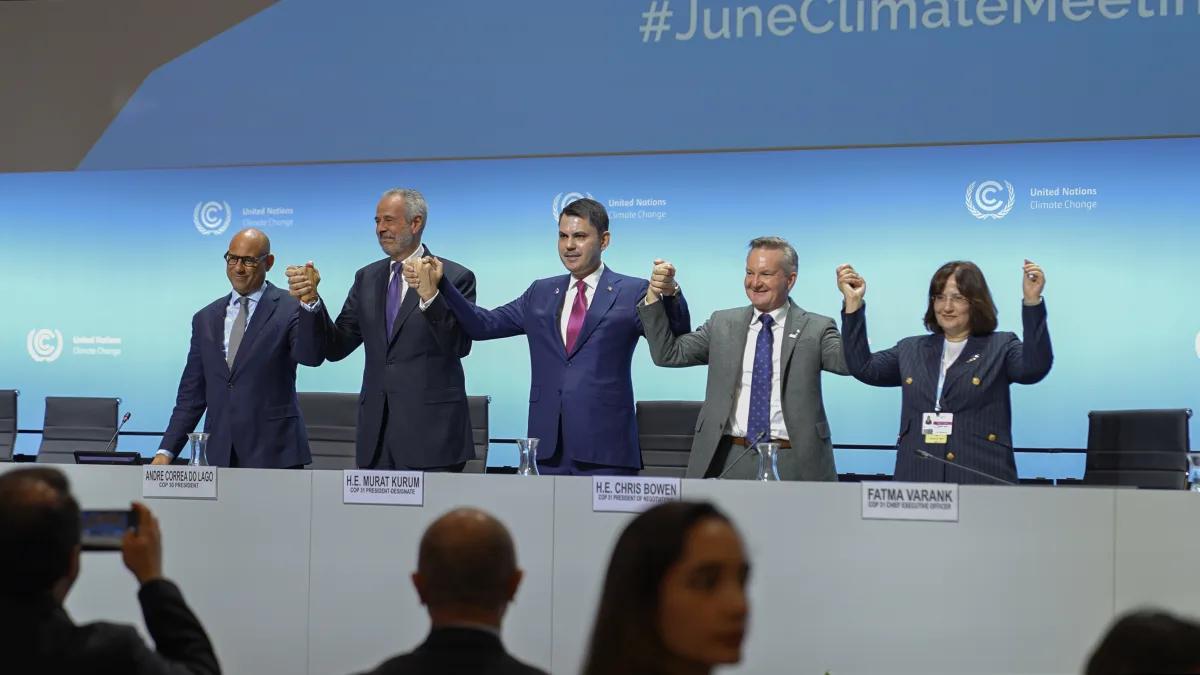
Dear friends, I have just shared with you the main framework of our COP31 Action Agenda. Now I would like to share the global goals that will give this agenda concrete shape, invite parties to joint action, and strengthen the will to implement it. As the COP31 Presidency, we invite all parties and the international community to unite around these goals.
One theme stood out very clearly in all the meetings we held: electrification. It is one of the main pillars that complements renewable energy and energy efficiency in achieving the 1.5-degree target, and one of the most important keys to decarbonization. Today, electricity demand is increasing significantly. Yet grid inadequacies, funding gaps, policy inconsistencies, and high initial investment costs are limiting progress. Despite all these challenges, by demonstrating a shared global will to accelerate electrification, we aim to reach a 35 percent electrification rate by 2035. "35 percent by 2035" will be one of the key priorities of our COP31 Presidency, and on the road to Antalya we will work to build a strong global coalition for this goal.
Secondly, I would like to highlight the Zero Waste Movement and methane reduction initiative launched by the First Lady, Mrs. Emine Erdoğan. With this initiative, we aim to take zero waste to a higher level in climate policy. Reducing methane is one of the quickest and most implementable opportunities to slow global warming; the waste sector accounts for roughly 20 percent of human-caused methane emissions, and proven, scalable solutions are already available. We call on all parties to adopt the goal of halving the increase in waste production by 2035.
Thirdly, resilient cities are a key focus of our Action Agenda, with many sub-dimensions. At this stage, I would like to share our specific goal on buildings. Reducing emissions and increasing energy efficiency in buildings is critical for the climate resilience of cities, and so we want to open for discussion among stakeholders the target of reducing energy-use intensity in the building sector by at least 25 percent by 2035.
Fourthly, on green transformation in industry: achieving a "circular material use rate" of at least 15 percent in the production and manufacturing sector by 2035 would be a significant gain, contributing strongly to both emission reduction and resource savings.
Fifth, we view the fight against waste, food security, and climate awareness not as separate issues but as a shared area of transformation that should reach every segment of society. Today, millions of people around the world face food insecurity. The climate crisis directly affects our food supply, water, agricultural production, rural life, and the livelihoods of future generations. We must therefore bridge the gap between food, water, and climate, and build a more resilient, efficient, and equitable system. In this framework, from agriculture to industry, from education to social life, from public services to business, we will support an approach that reduces waste, uses resources efficiently, and strengthens climate awareness. We aim to include climate change in education curricula by 2030 and, through widespread educational activities, to build strong climate awareness across society by 2035.
Dear participants, in implementing and achieving all these goals, we will adopt an inclusive approach that takes into account the different conditions and priorities of each country. To support this, we will work closely with all countries, especially developing economies, and contribute to strengthening access to technical assistance, capacity-building, and financial support mechanisms. The new mechanism we define as the Climate Implementation Bridge aims to fill precisely this gap, strengthening the alignment between climate goals and economic and development policies, particularly in developing and least developed countries, and helping to create an investment-friendly environment.
The Climate Implementation Bridge will support a stronger link between NDCs and economic policies, help countries transform their priorities into portfolios of investable projects, and play a facilitating role in providing suitable financing solutions and mobilizing private capital at greater scale. I want to emphasize that it is not a new fund, not a new financing mechanism, and not an alternative to existing initiatives. On the contrary, it is a complementary initiative that supports the existing climate finance and implementation ecosystem, strengthens partnerships among actors, and focuses on implementation. Our aim as the COP31 Presidency is to bridge the distance between climate targets and real investments, and to ensure financing reaches the ground faster, more effectively, and in a more results-oriented way.
The COP31 Presidency is resolutely pursuing the preparations for COP31, which will be held in Antalya. Over the coming weeks and months, we want to advance work on all ten priority themes and in areas beyond them, and to bring our efforts under COP31 and the Global Climate Action Agenda to a successful conclusion. To achieve this, we need the support of all of you.
Dear friends, today the world is not just waiting for new decisions. The world wants to see those decisions implemented, because nature is tired and humanity is tired. Drought reaches the dinner table; floods wipe out a lifetime's labour in a single night; fires burn not only trees but memories, homes, and hopes for the future. For the children who lack access to clean water, for the farmers who entrust their future to the land, for the families who have lost their homes and hopes in disasters, for the societies that pay the heaviest price despite bearing no responsibility for emissions, and for the generations who will inherit this world after us, we must act faster now.
In the words of Mevlana Celaleddin Rumi: "Yesterday is gone with yesterday, my dear; now we need to say new things, do new things!" Yes, now is the time to do new things. Let us take action instead of waiting. Let us turn intentions into action. Let us bring commitments to fruition. Let us transform our differences into a shared strength for solutions. In Antalya, let us not just talk about the future; let us shape the future together. Following the call of Yunus Emre, one of Anatolia's spiritual leaders: "Let us get to know one another, let us make things easier." We met and listened in Bonn, and we will meet again in Antalya. Together, we will take climate action from words to action, and from action to results. We will shape the future together. Thank you all.