COP31 and the Climate Implementation Bridge

COP31 and the Climate Implementation Bridge: Positioned under the “Action” pillar of the COP31 Vision, the Climate Implementation Bridge aims to transform Nationally Determined Contributions into bankable projects while promoting the fair distribution of global climate finance.
COP31 and the Climate Implementation Bridge
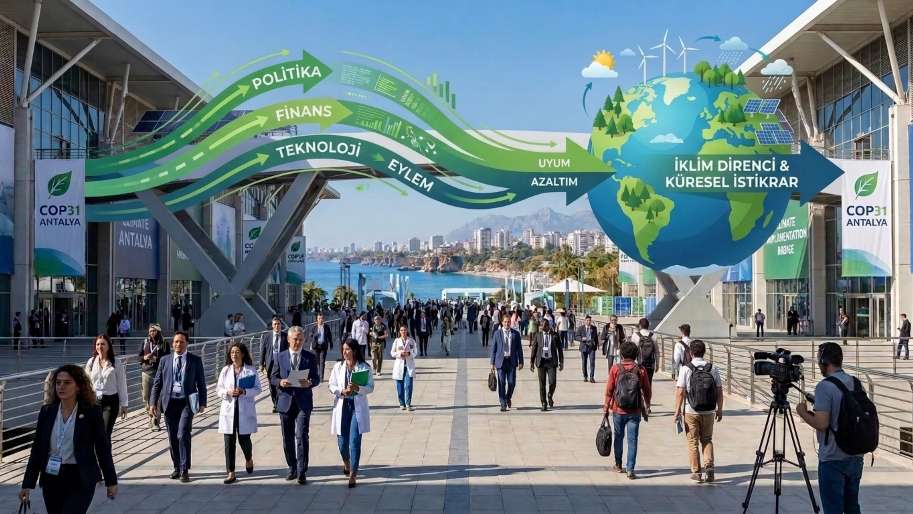
COP31 and the Climate Implementation Bridge represents an implementation-oriented approach designed to directly address one of the most critical challenges long discussed in global climate diplomacy: transforming countries’ announced climate commitments into concrete, financeable projects that deliver real-world results. Climate targets are no longer assessed solely through political declarations or long-term intentions. What matters is not only what a country says about emissions reduction, energy transition, resilient cities, clean transportation, industrial decarbonization, or climate adaptation, but also which financing model, institutions, and implementation capacities it will use to turn these goals into reality.
For this reason, the Climate Implementation Bridge, positioned under the “Action” pillar of the COP31 Vision, stands out as a strategic mechanism aimed at closing the gap between commitment and implementation. At the core of this approach is ensuring that Nationally Determined Contributions do not remain merely diplomatic documents, but are transformed into investable project portfolios, while global financing resources are directed more fairly toward developing countries, vulnerable communities, and sectors with high transformation needs.
How Dialogue, Consensus, and Action Work Together in the COP31 Vision
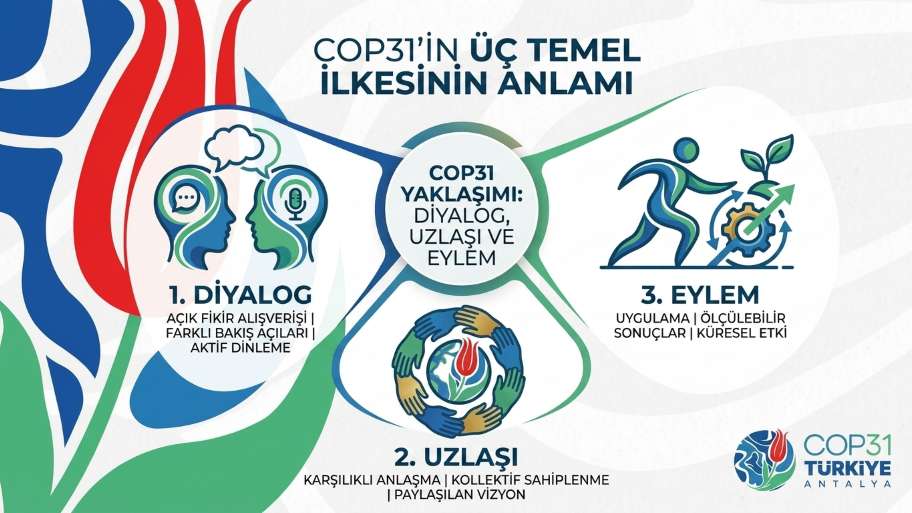
The COP31 Vision structures climate diplomacy around three fundamental principles: Dialogue, Consensus, and Action. These three elements are not treated as independent steps, but as parts of a process that complement one another. Without Dialogue, it becomes difficult to understand shared needs accurately; without Consensus, common responsibility cannot be established; and without Action, commitments fail to produce results on the ground.
The Dialogue approach is not limited to formal negotiations between governments. The inclusion of vulnerable communities, developing countries, young people, local governments, civil society organizations, scientists, and private sector representatives is also an important part of this understanding. In this way, climate policies are intended not to consist solely of targets defined by central governments, but to reflect the real needs of different segments of society.
The Consensus pillar brings together issues such as energy security, economic development, social justice, and emissions reduction, which are sometimes presented as opposing priorities in climate policy. It recognizes that the green transition is not merely a technical emissions reduction process, but a transformation with broad economic and social impacts, ranging from employment and production structures to energy costs and regional development.
Action, meanwhile, refers to the stage where this process is converted into tangible outcomes. In the COP31 Presidency’s approach, climate commitments gain real value when they generate measurable and verifiable results on the ground. The principle that “Commitment is a declaration of intent, while implementation is trust” reflects the foundation of this perspective.
At this point, the Climate Implementation Bridge aims not only to create projects that can secure financing, but also to strengthen trust within the international climate system. Making visible which investments will be used to implement a country’s announced target can enable public institutions, investors, and international financial organizations to participate in the process with greater confidence.
From Commitments to Financeable Projects Through the Climate Implementation Bridge
The Climate Implementation Bridge is positioned as one of the six Global Implementation Goals of the COP31 Presidency. The mechanism’s primary objective is to transform the climate targets set out in countries’ Nationally Determined Contributions into implementable and investable project portfolios.
Nationally Determined Contributions form the framework for the national climate targets that countries establish under the Paris Agreement. These documents may include goals related to emissions reduction, renewable energy, energy efficiency, climate adaptation, and many other areas. However, these goals often remain at a strategic level.
For example, a country’s target to “increase renewable energy capacity” is not sufficiently detailed on its own from an investor’s perspective. It is also necessary to clarify in which regions solar or wind investments will be made, how the electricity grid will be strengthened, what the need for energy storage will be, how the financing model will be structured, and what the project’s return profile will look like.
The same applies to urban policy. Although “building resilient cities” is an important objective, from a financing perspective it must be broken down into concrete investment areas such as infrastructure, water management, public transportation, energy efficiency, green spaces, disaster resilience, and strengthening the building stock.
The Climate Implementation Bridge is designed precisely to enable this transformation. Establishing a connection between strategic targets and the level of project detail required by the financial world can increase the implementability of climate commitments.
Transforming Nationally Determined Contributions into Project Portfolios
For a climate target to become investable, explaining its environmental benefits alone is not enough. The project’s cost, implementation period, technical feasibility, revenue model, financing needs, potential risks, and measurable outcomes must also be clearly defined.
For example, if a country wants to reduce carbon emissions in the industrial sector, simply stating the target as a percentage is not sufficient for implementation. It is also necessary to determine which sectors will be prioritized, which technologies will be used, how energy efficiency investments will be supported, how transformation costs will be shared, and how companies will gain access to financing.
This approach can move Nationally Determined Contributions beyond abstract targets and turn them into investment plans. It also makes it possible to consider projects in different sectors not as isolated initiatives, but as complementary portfolios.
A country’s project portfolio could, for example, include renewable energy plants, electricity grid investments, energy storage projects, electric transportation infrastructure, industrial decarbonization, and climate-resilient urban projects together. Such a structure can help international financial institutions assess a country’s needs in a more comprehensive manner.
Distributing Global Financial Flows More Fairly
An important dimension of the Climate Implementation Bridge concerns not only the size of financing, but also where that financing reaches. Global financial resources tend to flow toward countries with stronger investment environments, lower levels of risk, and greater capacity for project preparation.
However, many of the countries most affected by the climate crisis are also among those facing the greatest difficulties in accessing affordable financing. Low-income countries, small island states, and regions exposed to drought, flooding, and extreme heat may face higher climate risks while struggling to finance large-scale investments.
For this reason, the fair distribution of climate finance is regarded not only as an economic issue, but also as one of the fundamental elements of climate justice.
The concentration of financing in only a few markets may also create problems for global climate goals. Investment needs for emissions reduction and improved climate resilience exist worldwide. If financing flows only toward the most economically attractive projects, transformation in regions most exposed to climate impacts may be delayed.
The Climate Implementation Bridge therefore gains importance as a tool designed to strengthen the project preparation capacity of developing countries and enable them to establish more direct links with international financing sources.
Using Public and Private Finance Together
Considering the scale of investment required for the global climate transition, progress through public resources alone does not appear feasible. Very large-scale investments are needed in areas such as renewable energy, electricity grids, transportation, industry, buildings, water management, and climate adaptation.
For this reason, cooperation between public finance and private capital is essential.
Public resources can assume certain risks that private investors may be unwilling to take. Development banks can provide lower-cost financing, guarantee mechanisms can reduce investment risks, and blended finance models can encourage private capital to enter more challenging markets.
The collaboration announced between COP31 President Murat Kurum and Michael R. Bloomberg during London Climate Action Week, in which mobilizing private finance was identified as one of the focus areas, also supports this approach.
Structures such as GFANZ, GCBC, and Türkiye’s industrial decarbonization platform TIDIP stand out as examples that can strengthen cooperation between financial institutions, companies, and public authorities.
Financing and Technology Needs in Industrial Decarbonization
The industrial sector is one of the most challenging areas of the climate transition. In steel, cement, chemicals, glass, and other energy-intensive sectors, reducing emissions cannot be achieved solely by shifting electricity generation to renewable sources.
A range of different solutions may be needed, including increasing energy efficiency in production processes, electrification, low-carbon fuels, hydrogen technologies, circular production methods, and, in some sectors, carbon capture solutions.
This transformation requires significant capital.
Especially for companies operating in developing countries, access to affordable, long-term financing is not always easy. Currency risk, technology costs, and long investment payback periods can make corporate decision-making more difficult.
Mechanisms such as the Climate Implementation Bridge can help financial institutions approach these projects more systematically by making transformation projects in the industrial sector more visible and investable.
The Large Investment Wave in Electrification and Energy Infrastructure
Electrification lies at the heart of the energy transition. Reducing fossil fuel consumption in transportation, industry, buildings, heating, and many other areas is increasing electricity demand.
This requires not only the construction of new renewable energy plants, but also major improvements in electricity grids.
Strengthening connections between electricity generation and consumption points, increasing storage capacity, deploying digital grid technologies, and improving demand management are among the critical elements of the energy transition.
Projected investment on a trillion-dollar scale in electricity supply and infrastructure for 2026 clearly demonstrates the financial scale of the transition.
In an investment wave of this magnitude, the question of which countries and projects receive financing can directly affect the success of global climate goals. The Climate Implementation Bridge can help international capital identify clearer investment opportunities by transforming countries’ electrification targets into concrete infrastructure projects.
Balance and Consensus in Türkiye’s Climate Story
The importance of the COP31 process for Türkiye is not limited solely to hosting the summit. Türkiye’s climate narrative emphasizes Anatolia’s historical heritage, its role in bringing different civilizations together, and the idea of balance between humanity and nature.
Within the framework of Türkiye’s Climate Story, Göbekli Tepe is regarded as an important symbol extending back into humanity’s shared past. At the center of this narrative is the idea that civilization developed not only through domination over nature, but by maintaining balance with its surroundings.
Throughout history, Anatolia has been a geography where different cultures, beliefs, and trade routes intersected. This historical heritage carries strong symbolic meaning for climate diplomacy, where different interests must come together around the same table.
Climate change is likewise not a problem that can be solved by a single country or a single institution. Continuous cooperation is needed among developed countries, developing economies, public institutions, the private sector, the scientific community, local governments, and societies.
From the Zero Waste Movement to Global Climate Implementation
Türkiye’s Zero Waste movement can be considered one of the concrete examples of transforming climate commitments into implementation. Reducing waste, increasing recovery, improving resource efficiency, and expanding the circular economy approach contribute to making climate policies visible in everyday life.
This approach also demonstrates that climate action does not consist only of large energy and infrastructure investments.
Decisions made across different areas, from local governments’ waste collection systems and corporate production processes to individual consumption habits and product design, can also contribute to reducing carbon footprints.
Circular economy projects may also represent an important investment area for the Climate Implementation Bridge. When initiatives such as waste reduction, recycling, reuse, resource efficiency, and extending product lifespans are integrated into the investment portfolios of Nationally Determined Contributions, they can create additional financing opportunities.
Strengthening the Implementation Era Through COP31 in Antalya
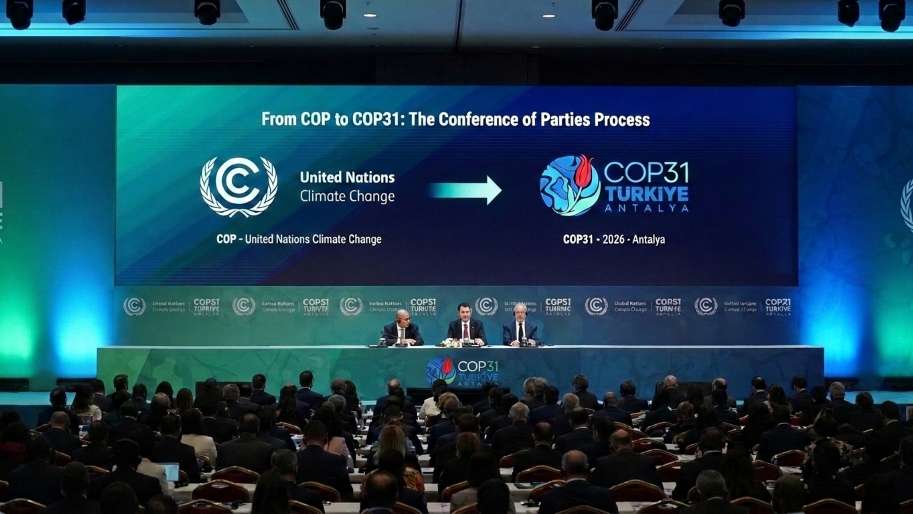
COP31 is planned to take place in Antalya from November 9 to 20, 2026. Bringing together 197 Parties, the summit has the potential to become not merely a diplomatic gathering where new goals are announced, but a platform where the implementation capacity of existing commitments is discussed in greater depth.
The “COP of the Future” approach demonstrates that implementation and financing are becoming increasingly central to the next phase of climate diplomacy.
In Antalya, bringing together governments, international organizations, financial institutions, private sector representatives, local governments, and civil society actors can enable different needs to be evaluated within the same platform.
The Climate Implementation Bridge stands out as one of the most concrete instruments in this process. Making national targets understandable to the financial community, increasing the number of investable projects, and facilitating developing countries’ access to capital may become decisive factors in the mechanism’s long-term success.
An Implementation Perspective Extending to 2035
The COP31 Presidency’s objective of expanding the Climate Implementation Bridge through 2035 shows that the structure is not intended as a temporary initiative linked only to the COP31 summit.
Climate policies require long-term transformation processes. Renewing energy infrastructure, transforming industrial facilities, making cities climate resilient, or electrifying large-scale transportation systems can require periods much longer than just a few years.
For this reason, the 2035 perspective provides a framework that can support Nationally Determined Contributions continuously through project and financing plans.
A long-term implementation horizon also increases the importance of monitoring and evaluation systems. The number of projects that receive financing, the amount of investment mobilized, the countries supported, and the climate outcomes produced should all be measured regularly.
How Can the Success of the Climate Implementation Bridge Be Measured?
The success of a climate mechanism should not be assessed solely by the amount of financing announced. It is also important to determine whether resources actually reach projects, how quickly projects are implemented, and which communities benefit from those investments.
Possible indicators for the Climate Implementation Bridge may include the number of projects made investable, the amount of public and private finance mobilized, the proportion of resources reaching developing countries, emissions reductions, increases in energy capacity, and the number of people whose climate resilience has been strengthened.
Transparent reporting plays a critical role at this stage. No matter how ambitious a mechanism’s goals may be, it can be difficult to build trust if its outcomes cannot be monitored independently.
For this reason, implementation, measurement, and verification processes must complement one another.
Trust in climate diplomacy grows not only through the targets countries announce, but through the extent to which those targets are actually implemented. The Climate Implementation Bridge can support this trust by connecting commitments with verifiable results on the ground.
Türkiye’s Message to the World on Implementation, Balance, and Cooperation
The Dialogue, Consensus, and Action approach emphasized within Türkiye’s COP31 Vision is based on the idea that climate challenges cannot be addressed through one-dimensional solutions. Anatolia’s historical legacy of balance and coexistence, implementation examples such as Zero Waste, and the importance placed on developing countries’ access to finance represent different dimensions of this approach.
COP31 in Antalya may evolve beyond being a summit where countries merely announce new commitments, becoming a platform where the implementation of existing targets is discussed more strongly.
At this point, the Climate Implementation Bridge can be considered one of the institutional expressions of Türkiye’s implementation-oriented climate diplomacy message. Investable projects, more inclusive financing models, and partnerships established between different actors are among the key tools that can increase the real-world impact of climate action.
A New Era in Which Commitments Turn into Trust on the Ground
The true value of a climate commitment emerges when it secures financing, becomes an implementable project, and produces measurable results on the ground. The fundamental approach of the Climate Implementation Bridge takes shape precisely at this point: transforming countries’ pledges into investable projects, global finance into accessible resources, and international consensus into concrete implementation.
One of the most important messages COP31 can send from Antalya to the world is that trust in the new era of climate diplomacy cannot be built through announced targets alone. Trust becomes stronger when it is visible in energy facilities, more resilient cities, transformed industrial processes, improved electricity infrastructure, circular economy practices, and vulnerable communities that gain access to financing.
For this reason, the Climate Implementation Bridge can be viewed not merely as a financing connection, but as a broader implementation architecture designed to reduce the distance between commitment and real life. The Action pillar of the COP31 Vision also indicates that the central question in the next phase of the climate agenda will not simply be “which targets will be announced,” but “how and how quickly those targets will be implemented.”
C. Türkiye's Climate Story Series