Opening Remarks at the WMO High-Level Session

Madam Secretary-General, Distinguished Ambassadors,
On behalf of the COP31 Presidency, I warmly welcome you all. I thank the World Meteorological Organization for bringing us together today.
This meeting is especially meaningful as we move towards COP31. A warm welcome to you all.
Dear Friends,
Decades of scientific knowledge and experience underpin our shared understanding of climate change. They guide our decisions and our cooperation.
As the COP31 Presidency, our responsibility is to safeguard this scientific foundation. We must strengthen the link between science and action.
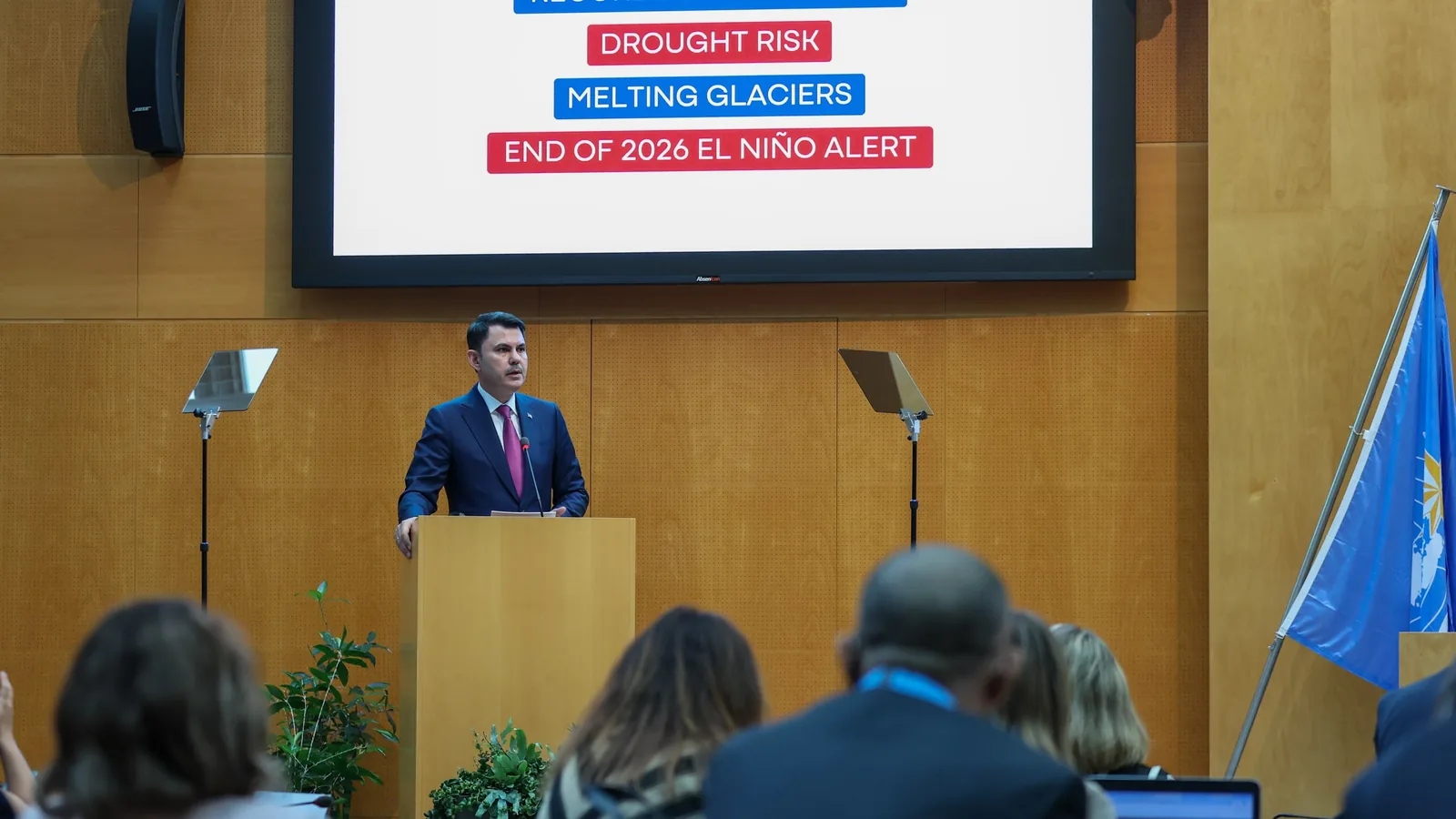
The World Meteorological Organization is one of the world’s most valuable sources of scientific knowledge. Its data show that the global climate system is more unstable than ever before. Temperatures are at record highs. Drought threatens communities. Glaciers are melting. And warnings point to El Niño towards the end of 2026.
Across the world, climate risks are now directly affecting people’s lives and livelihoods, our cities and our prospects for development.
We saw one of the most painful examples in Nepal just a few weeks ago. A glacier collapse in the Himalayas triggered devastating floods. Entire communities, roads, bridges and energy infrastructure were hit. The disaster claimed 1,386 lives. More than 5,130 people are still missing.
If we want to understand the consequences of climate change, we need only look at Nepal.
We face the same troubling picture in our own country. In Türkiye, temperatures are rising. Rainfall patterns are changing. Extreme weather is becoming more frequent.
We are seeing greater swings in rainfall than ever before. In 2025, we recorded the lowest rainfall in 52 years. In 2026, we reached the highest level in 66 years.
Over the past decade, heavy rainfall has caused floods and landslides in some of our provinces, leaving homes and streets under water. At the same time, we have battled forest fires elsewhere in the country.
These events remind us what is at stake when we talk about weather risks: homes, farmers, children and families.
That is why we must be clear. Accurate observations, reliable forecasts and timely warnings are now among the world’s most basic human security needs.
Effective action begins with understanding the risk.
Weather and climate information provide the scientific basis for our decisions. We rely on them to prepare for disasters, manage water, protect agriculture and health, and plan resilient cities.
Stronger observation, forecasting and early warning systems are therefore central to our focus on implementation at COP31.
Türkiye strongly supports the World Meteorological Organization’s Early Warnings for All initiative.
We have built strong capabilities in this area. The Turkish State Meteorological Service closely monitors weather conditions using observation systems, weather radars, satellite data and forecasting models.
Our MeteoUYARI system uses colour codes to indicate approaching hazards. It delivers warnings to the public and relevant authorities at both provincial and district levels.
This allows us to identify risks earlier. It gives decision-makers more time to act.
This work also helps us address another challenge. For a farmer, a temperature change of just a few degrees can affect an entire year’s work. So can rain arriving a few hours early, unexpected hail or a single night of frost. Weather forecasts are therefore a vital tool for agricultural production. They help farmers decide when to sow, irrigate, spray and harvest.
When weather information helps farmers make better decisions each day, it also strengthens food security.
Forecasts that focus on likely impacts help people prepare. Accurate forecasts and early action can prevent major losses. The real measure of an early warning is whether it leads to action in time. We must bring science and implementation closer together.
We want knowledge to guide planning, investment and action.
Our goal is clear. We want a world where people are better protected from disasters and cities can anticipate risks. Where farmers receive the right information in time to act. And where clean, reliable energy is within reach of more people.
Distinguished Participants,
Whatever climate-related disaster we discuss, the same truth emerges.
We must minimise risks, cut emissions faster, strengthen our capacity to adapt and support vulnerable communities.
We must move beyond words. Together, we must bring down the planet’s rising fever.
The road ahead may become harder. But we cannot change course. The 1.5°C goal is our compass.
We must do all we can to strengthen the policies and action that will lead us towards a safer climate future.
The COP31 Presidency understands this responsibility. That is why, from the outset, we have called for an Implementation COP.
In Antalya, we want to discuss how to deliver on existing commitments. We also want to address the barriers countries face in finance, technology and capacity.
This is the purpose of our approach: Dialogue, Consensus and Action. We seek to understand different circumstances and build broader common ground. Then we must turn that agreement into tangible results.
We have already taken important steps.
Our Action Agenda, announced in Bonn, sets out ten priorities: clean energy and electrification; Zero Waste; resilient cities; green industrialisation; youth and education; food security; oceans and seas; resilient health systems; Rio Synergies; and the Climate Implementation Bridge.
By 2035, we aim to accelerate electrification and reduce energy use in buildings. We also aim to slow the growth of waste, increase circular material use and strengthen climate education.
Across these priorities, we have brought together scientists, cities, young people, businesses and financial institutions. Our purpose is to turn our goals into action.
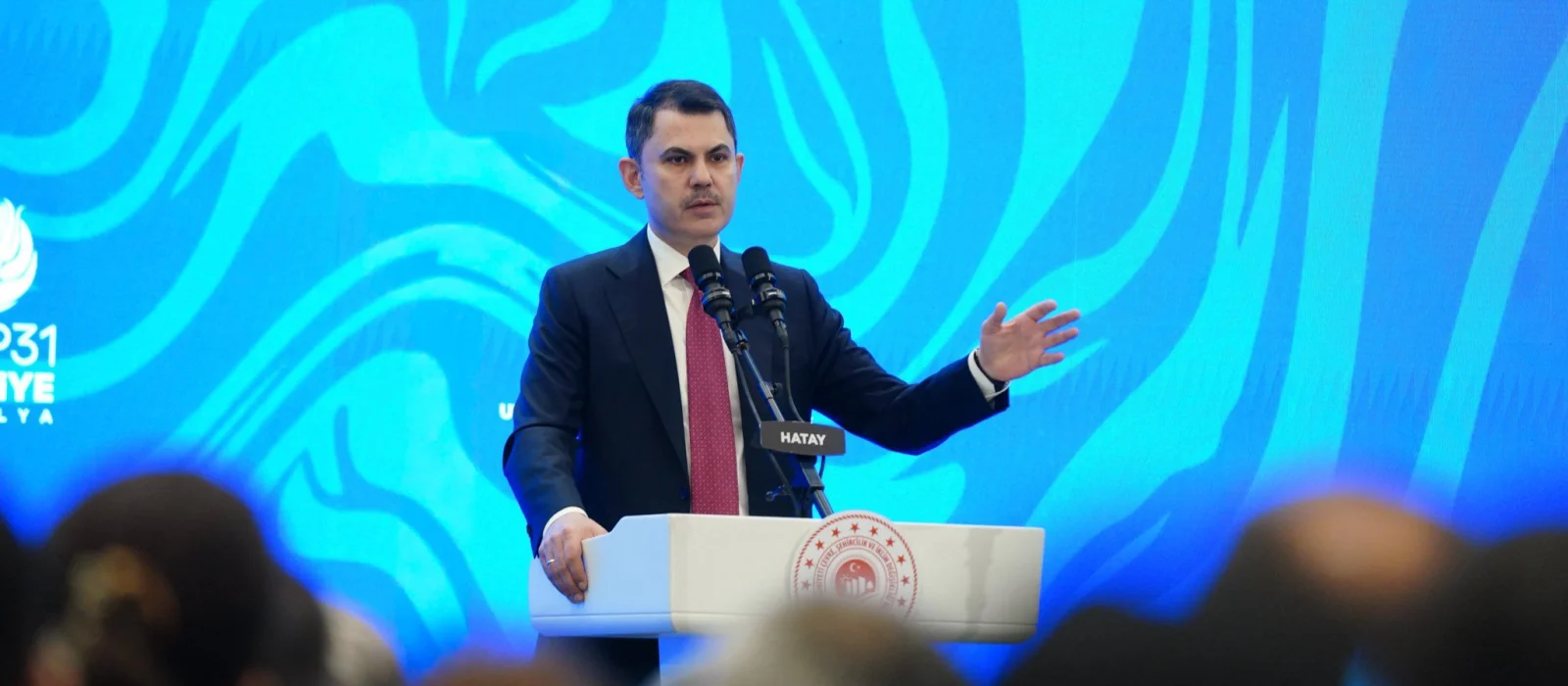
In Hatay, we discussed resilient cities. After the disaster of the century, we brought Hatay back on its feet in two years. At the Climate Finance Summit, we focused on closing the gap between our goals and the investment needed to achieve them.
In Trabzon, we discussed seas and oceans as an integral part of the climate system. In Ankara, we assessed needs and implementation priorities with representatives from more than 100 countries.
Next on our agenda are New York Climate Week, the Pre-COP in Fiji and the World Leaders Summit. In Antalya, we will also have a thematic day dedicated to science.
At every stage, we will bring science more closely into the decisions we make and the action we take.
I would like to take this opportunity to invite you to the COP31 thematic days.
We want the dialogue that begins here to lead to concrete partnerships, investment and action in Antalya.
As I close, let me make one final point.
Through the Turkish State Meteorological Service, we will continue to share our knowledge and experience with other countries.
We are also continuing our training programmes to strengthen technical capacity in the least developed countries.
Over the next three years, we will train 30 technical staff from the least developed countries each year. We will give them all the support they need.
I look forward to seeing you in Antalya in November. Thank you all.