Who Can Attend COP31? A Step-by-Step Look at the Accreditation Process

Who can apply for COP31 accreditation, how does the 4-step process work, and which documents are required for a badge? Learn the importance of applying early, step by step.
COP31, which Türkiye will host in Antalya from 9 to 20 November 2026, aims to be a turning point in global climate diplomacy with its "COP of the Future" vision. At this large-scale conference, where approximately 100,000 participants are expected, access to the Blue Zone, where negotiations and official meetings are held, is limited only to participants accredited by the UNFCCC. So who can be part of this process, and how does accreditation work? In this article, we take a step-by-step look at the Accreditation process.
Who Can Apply for Accreditation?
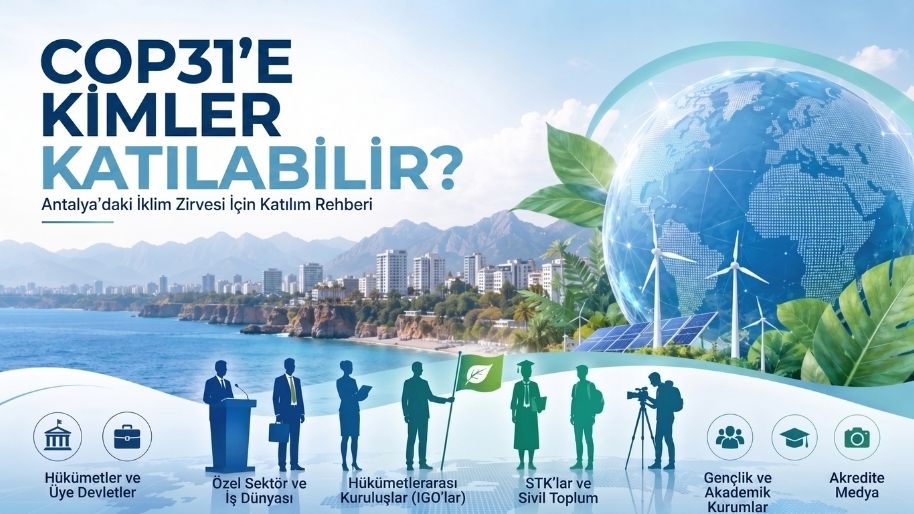
COP31 is designed to be openly accessible to a broad range of stakeholders, in keeping with an inclusive and equitable understanding of climate diplomacy. The groups deemed eligible for accreditation are as follows:
- Delegates of Party countries
- Accredited observer organisations
- United Nations agencies and international organisations
- Civil society organisations (CSOs)
- Business and industry representatives
- Academic institutions
- Accredited media members
This broad participant base is directly linked to the principle of "Rebuilding Trust through Dialogue", which aims to bring the voices of vulnerable communities, developing countries, local governments, civil society and young people into the negotiating rooms. Those who wish to understand the general framework of the accreditation process can find essential information about how the conference works on the What is COP page.
The Accreditation Process: How Does It Work in 4 Steps?
The UNFCCC accreditation process consists of four core steps designed to ensure transparency and orderly management of participants:
- Organisation Registration: the organisation wishing to take part is registered in the system.
- Participant Nomination: the individuals who will attend the conference on behalf of the organisation are put forward.
- UNFCCC Approval: the nominated participants are reviewed and approved by the UNFCCC.
- Approval Notification: once the approval process is complete, an official notification is sent to the participant.
This four-step structure aims to guarantee a verifiable and orderly participation process on the ground. Completing each stage in full is of great importance for collecting the badge without any problems.
Documents Required to Collect Your Badge
Following accreditation approval, participants must apply to the Registration Centre in Antalya to collect their badges. At this stage, the following documents must be kept ready:
- A valid passport or official identity document
- Accreditation approval document
- Invitation letter (if any)
The badge must always be carried visibly within the Blue Zone, since access to this area is open only to accredited participants, national delegations, UNFCCC observer organisations, UN agencies and accredited media. The Green Zone, which hosts exhibitions, workshops and networking events, meanwhile appeals to a broader range of participants, including businesses, CSOs, academic institutions, start-ups and interested visitors.
Why Is Early Application Important?
Approximately 100,000 participants are expected to attend COP31. Given this high concentration of participants, completing the accreditation application early is strongly recommended. An early application helps both the Organisation Registration and Participant Nomination stages proceed smoothly and the UNFCCC Approval process to be completed on time. Participants are also advised to plan their travel, accommodation, transportation and visa processes in parallel with the accreditation timetable; detailed information on these matters can be found on the Plan Your Travel and Visa and Entry pages.
Conclusion: From Dialogue to Consensus, From Consensus to Action
The accreditation process is not merely a technical formality; it is a concrete reflection of COP31's vision of inclusive and equitable climate diplomacy. Guided by the principle that "A commitment is a declaration of intent; implementation is trust," each participant completing the process on time and in full will enable the conference to contribute, through shared will, to its goal of moving from commitment to implementation. In the process it is hosting, Türkiye embraces an understanding of climate diplomacy in which no one is left behind and progress is made through concrete steps.