How Did COP31 Come to Antalya? The Road from Baku to Antalya

How was the process stretching from COP29 Baku and COP30 Belém to COP31 Antalya shaped by Türkiye's host role and the "COP of the Future" vision? The details are in our article.
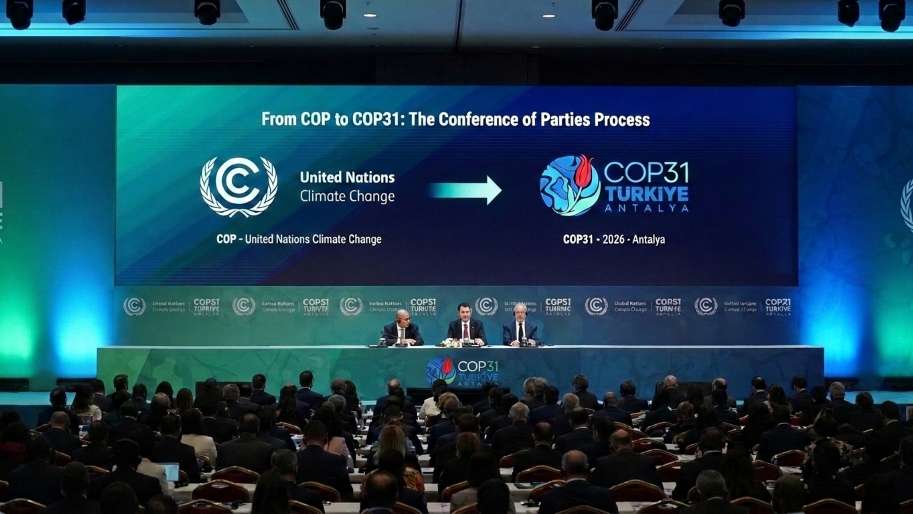
Following the adoption of the United Nations Framework Convention on Climate Change (UNFCCC) in 1992, the world's nations have gathered every year since 1995 to come together under a common roof against the climate crisis. As explained on the What is COP page, the Conference of the Parties (COP), as the UNFCCC's highest decision-making body, reviews national communications, assesses greenhouse gas inventories, and safeguards the transparency and accountability of global climate diplomacy. To understand how COP31 came to Antalya, one must first look back at this thirty-year journey.
A Thirty-Year Chain of Dialogue
The process began with COP1, held in Berlin in 1995. COP3, convened in Kyoto in 1997, gave rise to the Kyoto Protocol; COP15 in Copenhagen in 2009 became a symbol of the intense global public interest in climate negotiations. The Paris Agreement (COP21), signed in Paris in 2015, entered history as a landmark consensus document. In the years that followed, the process continued to take concrete form: the Glasgow Climate Pact was adopted at COP26 in 2021, COP27 in Sharm el-Sheikh brought the Loss and Damage Fund to life in 2022, and COP28, convened in the United Arab Emirates in 2023, set out the UAE Consensus on the transition away from fossil fuels. This chain bears the traces of an inclusive dialogue process that advances from commitment to implementation, producing increasingly concrete steps at each stop.
From Baku to Belém: The Immediate Prelude to Antalya
COP29, held in Baku in 2024, placed the Climate Finance Framework at the centre of the agenda and focused on the question of how developing countries could access the resources they need for a fair green transition. COP30, hosted by Brazil in Belém in 2025, served as a bridge that addressed how these finance discussions could be brought down to the ground. While Baku and Belém represented, respectively, the framework of finance and the search for a transition to implementation, COP31, the next stop in the process, marks a new stage that will turn this accumulated experience into concrete results.
COP31: The "COP of the Future" in Antalya
The 31st Conference of the Parties of the UNFCCC will be held in Antalya, Türkiye, from 9 to 20 November 2026. As the host country, Türkiye will host the conference under the presidency of Murat Kurum (Minister of Environment, Urbanisation and Climate Change). Approximately 100,000 participants from the 197 countries party to the UNFCCC are expected to gather in Antalya. This scale makes COP31 not merely a stop on the diplomatic calendar, but a comprehensive gathering that reflects the point climate negotiations have reached. The distinctive partnership structure developed between Türkiye and Australia during the preparatory process reveals the inclusive and collaborative spirit of COP31 from the very outset. The vision slogan set by the Presidency sums up this spirit in a single phrase: the "COP of the Future". Detailed information about the official centre where the conference's negotiations are held can be found on the Blue Zone page, while information about the venue where the conference will take place can be found on the Venue page.
Dialogue, Consensus, Action: The Vision Taking Concrete Form in Antalya
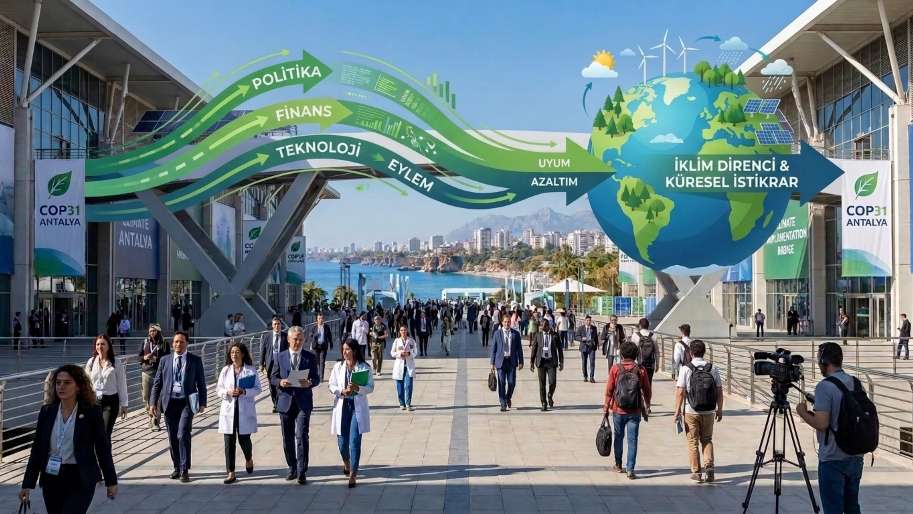
COP31's vision is built upon three fundamental pillars, detailed on the COP31 Vision page: Rebuilding Trust through Dialogue aims to build a fair and inclusive climate diplomacy in which no one is left behind, by carrying the voices of vulnerable communities, developing countries, local governments, civil society and young people into the negotiating rooms. The Shared Responsibility through Consensus pillar treats energy security and climate targets as mutually complementary elements and aims to strengthen global consensus mechanisms on the basis of a fair green transition. Bringing Commitments to the Ground through Action, in turn, envisions the rational, rapid and effective distribution of climate finance through mechanisms such as the "Climate Implementation Bridge". These three pillars aim to turn the finance foundation laid in Baku and the implementation pathways sought in Belém into concrete, field-verifiable results in Antalya. Indeed, the COP31 Presidency's vision principle expresses this clearly: "A commitment is a declaration of intent; implementation is trust." For how the Presidency gives concrete form to this vision through six global implementation targets, see the Presidency Priorities page.
Türkiye's Host Role: From Civilisation to Climate Action
Türkiye's hosting of COP31 is not merely a geographical coincidence. Humanity's shared story begins on the lands of Anatolia, at Göbeklitepe; the civilisation founded here was built not on domination but on balance. For centuries, Anatolia has carried the memory of a civilisation in which different cultures, languages and beliefs coexisted in consensus and cooperation rather than domination. Türkiye's approach to the climate crisis likewise rests on three principles nourished by this heritage: Dialogue, which builds understanding; Consensus, which creates shared responsibility; and Action, which turns commitments into concrete solutions such as the Zero Waste movement. Inspired by these lands where civilisation began, Türkiye calls for a collaborative, fair and sustainable global climate future. The full story can be found on the Türkiye's Climate Story page; the latest developments regarding Türkiye's role in global cooperation networks can be found on the Climate Cooperation page.
The road stretching from Baku to Belém now reaches a new stop in Antalya. COP31 brings together, on the lands of Anatolia, the shared will of a process spanning more than thirty years, one that has evolved from commitment to implementation and from intent to trust.