From COP to COP31: The Conference of the Parties Process

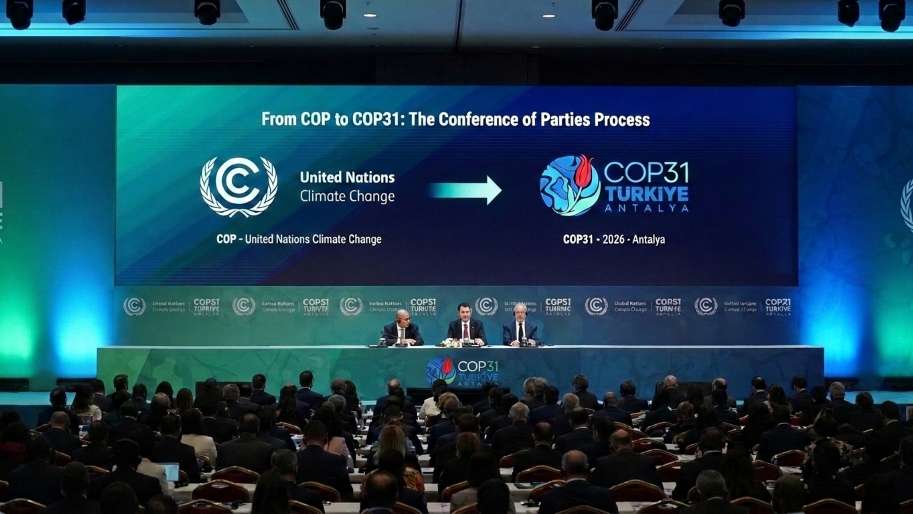
From COP to COP31: The Conference of the Parties process; from the Conference of the Parties to COP31, we explain the UNFCCC’s Conference of the Parties mechanism, which has been ongoing since 1995, the key milestones from Kyoto to Paris, and COP31’s place and duration in Antalya.
From COP to COP31: The Conference of the Parties Process
The Conference of the Parties process extending from COP to COP31 is one of the most important institutional frameworks for understanding how global climate diplomacy has evolved for more than three decades. Because the borderless nature of climate change makes it impossible for countries to produce lasting solutions by acting alone, international cooperation, shared goals, transparent reporting, and regular negotiation mechanisms form the foundation of this process. Held in a different country each year, the Conference of the Parties is not merely a high-profile summit where political leaders come together; it is a multilayered decision-making arena where scientific findings, national climate targets, financing discussions, adaptation policies, emissions reduction plans, and expectations for a just transition are assessed on the same platform. COP31, as the newest link in this long chain to be held in Antalya in 2026, marks a period that aims to bring issues such as translating past decisions into implementation, access to finance, shared responsibility, and trust back to the center of the global climate agenda.
The Birth of the Conference of the Parties and UNFCCC’s Place in the Global Climate Architecture
To understand how the Conference of the Parties emerged, it is necessary to look at the global climate discussions of the early 1990s. As the scientific community’s assessments of the impact of greenhouse gas emissions on global temperature rise became increasingly clear, the need for countries to act within a shared legal and diplomatic framework also grew stronger. As a result of this process, the United Nations Framework Convention on Climate Change, or UNFCCC, was adopted in 1992. The Convention’s fundamental approach was to recognize climate change as a common challenge for humanity and to establish an institutional structure that would enable Parties to act together in addressing that challenge.
COP is the abbreviation of the English expression “Conference of the Parties” and refers to the highest-level decision-making mechanism where Parties to the UNFCCC assess the implementation of the Convention, adopt new decisions, review previous commitments, and develop the climate regime in response to changing scientific, economic, and political conditions.
With the first Conference of the Parties held in Berlin in 1995, global climate diplomacy gained a regular rhythm. Since then, COP meetings have enabled climate policy to be shaped not only through scientific reports or national environmental strategies, but also through international negotiations.
This structure is inherently complex because it brings together countries with different economic capacities, historical responsibilities for emissions, and development needs. The historical emissions of developed countries during industrialization, the economic growth needs of developing countries, the vulnerability of small island states to sea-level rise, and the difficulties low-income countries face in accessing finance are all addressed within the same negotiation system.
The importance of the Conference of the Parties emerges precisely here. The aim is not to force all countries to act under identical obligations. How shared responsibility should be distributed, how much capacity different countries possess, and how climate action should be balanced with economic development are continuously negotiated.
For this reason, the COP process is broader than the implementation of a single agreement. Each meeting represents a stage in the development of climate law, financing mechanisms, technology cooperation, and national policy instruments.
Transparency, Accountability, and Shared Responsibility in the COP Process
One of the most important characteristics of the Conference of the Parties is that it is based on a regular monitoring mechanism. It is not considered sufficient for countries simply to announce targets; they are also expected to share data on how much of those targets has been implemented, which sectors have made progress, and which areas require support.
National communications, greenhouse gas inventories, climate policies, and Nationally Determined Contributions are among the key instruments of this process. In this way, the international system can look not only at what a country says, but also at what it actually does.
This understanding forms the foundation of trust in climate diplomacy.
It may be politically important for a country to announce ambitious emissions reduction targets. However, if several years later it is not possible to monitor the extent to which those targets have been implemented, the impact of the commitment remains limited. Similarly, if developing countries’ needs for finance or technology transfer are not clearly identified, international solidarity mechanisms may also fail to function effectively.
The principle highlighted in the COP31 Presidency’s approach — “Commitment is a declaration of intent, while implementation is trust” — is therefore not merely a communication message, but a principle that summarizes a fundamental challenge the Conference of the Parties system has faced for years.
Trust in climate diplomacy does not arise from all Parties following identical policies, but from commitments being monitored transparently.
Transparency is also important for the public. The Conference of the Parties process is not a closed negotiation conducted only by diplomats. Scientists, civil society organizations, local governments, young people, Indigenous communities, the private sector, and the media are also actors that increase the visibility and accountability of the process.
Although this multi-stakeholder structure can sometimes make COP meetings appear extremely complex, it also strengthens the inclusiveness of the system.
From COP1 in Berlin to a Global Tradition of Negotiation
COP1, held in Berlin in 1995, was the first major step in making the Conference of the Parties system institutionally operational. Although global awareness of climate change was increasing at the time, it was not yet clear what responsibilities countries would assume in reducing emissions.
The Berlin meeting accelerated discussions, particularly regarding stronger obligations for developed countries. This process later paved the way for the preparation of the Kyoto Protocol.
The historical importance of COP1 lies less in directly creating today’s advanced climate regime than in establishing the annual negotiation system. Bringing Parties together again every year, following up on previous decisions, and placing new needs on the agenda gradually created an institutional memory.
Many of the issues being discussed today as COP31 approaches can be traced back to these early debates: burden-sharing, financing, different economic circumstances, emissions targets, and implementation capacity.
The Emergence of Binding Targets with the Kyoto Protocol
COP3, held in Kyoto in 1997, marked one of the first major turning points in climate diplomacy. The Kyoto Protocol introduced binding emissions reduction targets for certain industrialized countries, bringing the climate regime into a more concrete legal framework.
This step was important in moving beyond declarations of intent in the fight against climate change.
However, the Kyoto system also demonstrated how difficult global climate policy could be. Countries had very different economic structures, energy resources, and political priorities. For this reason, establishing a worldwide emissions reduction system based on a single model was not easy.
One of Kyoto’s important legacies was bringing the debate over legal binding force to the center of climate policy. It also encouraged broader discussion of instruments such as carbon markets and flexible mechanisms.
Subsequent COP meetings were built upon the experience gained from Kyoto.
COP15 Copenhagen and the Gap Between Expectations and Reality
COP15, held in 2009, is an important example of how high global public expectations for climate summits can become.
Ahead of Copenhagen, there were strong expectations in many circles that a comprehensive and binding new global agreement could emerge. However, the outcome of the negotiations fell short of those expectations.
The Copenhagen process was nevertheless not without value for climate diplomacy.
The meeting made the debate over responsibility between developed and developing countries more visible. It also paved the way for issues such as climate finance and limiting temperature rise to be addressed more strongly in subsequent years.
This experience demonstrated that in COP processes, establishing the right political groundwork is just as important as setting ambitious targets.
Even the most ambitious text can be difficult to adopt in an environment where consensus has not been established.
The Paris Agreement and COP21’s Reshaping of the Global System
COP21, held in Paris in 2015, became one of the most important turning points in the history of the Conference of the Parties.
The Paris Agreement transformed the climate regime from a structure that imposed binding obligations only on certain groups of countries into a more inclusive system. Countries began preparing Nationally Determined Contributions, or NDCs, according to their own national circumstances.
The basic logic of this system is for countries to determine their own climate targets, strengthen those targets over time, and report progress regularly.
One of the important aspects of the Paris Agreement is that it strengthened efforts to keep the increase in global average temperature well below 2°C above pre-industrial levels and to pursue efforts to limit the increase to 1.5°C.
This objective became one of the political and scientific reference points for all subsequent COP meetings.
Paris also enabled the principle of “common but differentiated responsibilities” to be applied in a new form within climate diplomacy. While all countries became part of the process, differences in economic capacity and historical responsibility were not ignored.
COP26 Glasgow and Increasing Pressure for Implementation
COP26, held in 2021, was one of the meetings where expectations for implementation became significantly stronger in the period following the adoption of the Paris Agreement.
The Glasgow Climate Pact brought controversial issues such as strengthening national climate targets, coal use, fossil fuel subsidies, and climate finance more visibly onto the agenda.
One of Glasgow’s important messages was that adopting the Paris Agreement alone was not sufficient.
Countries now needed to support their targets with actual policies.
The need to accelerate transformation in areas such as energy systems, industry, transportation, and land use began to be discussed more explicitly.
This process also helps explain why the concept of “implementation” became increasingly central in subsequent COP meetings.
COP27 and the Climate Justice Debate Through the Loss and Damage Fund
COP27, held in Sharm el-Sheikh in 2022, marked an important turning point, particularly in terms of financing the loss and damage caused by climate change.
For many years, developing countries had argued that damage caused by the impacts of the climate crisis could not be addressed through adaptation policies alone.
When certain impacts cannot be prevented or exceed adaptation capacity, the question of how the resulting loss and damage should be financed had become a major issue of debate.
The decision to establish the Loss and Damage Fund gave these discussions an institutional form.
This development also increased the importance of the concept of climate justice on the COP agenda.
Access to finance for countries that have contributed relatively little to the climate crisis historically but suffer heavily from its impacts increasingly came to be treated not only as an economic issue, but also as an ethical and political one.
COP28 and the Growing Centrality of the Transition Away from Fossil Fuels
COP28, held in 2023, was one of the meetings where more direct language was used regarding the energy transition.
Within the framework of the UAE Consensus, the call to transition away from fossil fuels became more visible in global climate texts, representing an important development for energy policy.
The importance of this discussion is directly related to the fact that a large share of global greenhouse gas emissions comes from energy production and fossil fuel use.
However, the energy transition is not limited to reducing fossil fuel use.
Expanding renewable energy capacity, strengthening electricity grids, developing energy storage systems, electrifying industry, and implementing just transition policies are all parts of the same process.
For this reason, after COP28, the energy transition debate became more closely connected with financing and implementation.
COP29 Baku and a New Stage in Climate Finance Discussions
COP29, held in Baku in 2024, represented an important stage for the future of climate finance.
How to provide the resources developing countries need for emissions reduction, adaptation, energy transition, and resilience investments has long been one of the most difficult issues on the COP agenda.
The climate finance debate is not based only on the total amount of money available.
The conditions under which funds are provided, the balance between grants and loans, the role of the private sector, the capacity of development banks, and the debt burden of low-income countries are also important.
For this reason, climate finance is also an indicator of how closely the global economic system is becoming aligned with climate goals.
The financing framework shaped at COP29 can also be regarded as one of the steps that strengthened the foundation for implementation discussions in subsequent years.
COP30 Belém and the Deepening of the Implementation Era
COP30, held in Belém in 2025, is regarded as one of the stages where the post-Paris Agreement implementation era became more pronounced.
Belém’s geographical location also gave the meeting strong symbolic meaning. Held close to a region as critical to the global climate balance as the Amazon, the summit brought greater visibility to the relationship between nature, forests, biodiversity, and climate.
COP30 also brought the question of how implementable countries’ updated Nationally Determined Contributions actually were back onto the agenda.
From this point onward, the central issue for the COP system became not only announcing more ambitious targets, but also demonstrating which projects and financing mechanisms would be used to achieve those targets.
This approach directly intersects with COP31’s Action-oriented vision.
COP31’s Position in Antalya and Climate Diplomacy in 2026
COP31 will be held in Antalya from November 9 to 20, 2026, as the 31st Conference of the Parties to the UNFCCC.
Hosted by Türkiye, the meeting is expected to bring together representatives of 197 Parties and a very broad group of international participants.
Türkiye’s Minister of Environment, Urbanization and Climate Change, Murat Kurum, is serving as COP31 President on behalf of Türkiye.
The selection of Antalya as the host city not only increases Türkiye’s visibility in climate diplomacy, but also carries symbolic meaning because of the Mediterranean basin’s importance in terms of climate vulnerability.
The Mediterranean region is among the areas particularly vulnerable to climate change due to extreme heat, drought, wildfires, water stress, and risks affecting coastal areas.
For this reason, holding a COP in Antalya connects global climate negotiations with a geography where the impacts of climate change are directly experienced.
What Does the “COP of the Future” Vision Mean?
Preparing COP31 under the concept of the “COP of the Future” expresses an intention for the meeting to go beyond being a diplomatic event where past decisions are simply repeated.
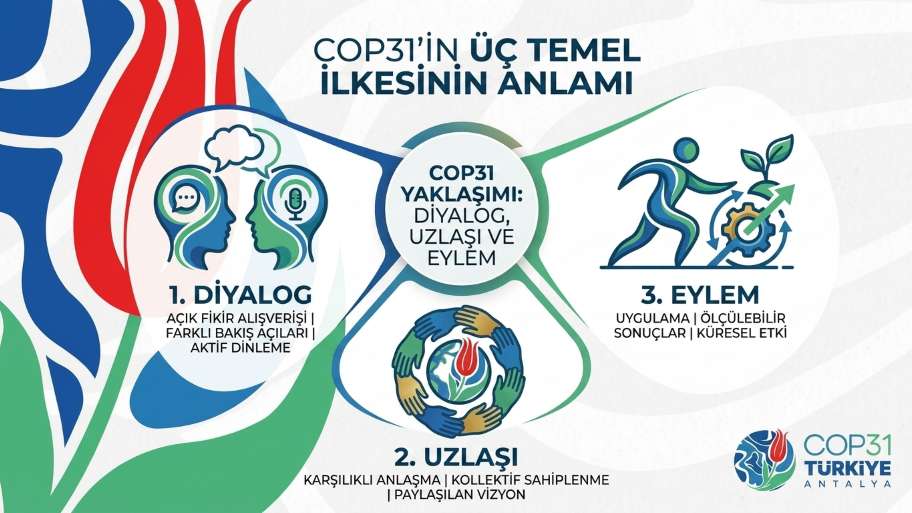
The concepts of Dialogue, Consensus, and Action lie at the heart of this vision.
Dialogue enables different interests and needs to be discussed openly.
Consensus aims to bring those differences together under a shared understanding of responsibility.
Action refers to implementing adopted decisions on the ground.
This three-part structure can in fact be seen as a concise summary of the Conference of the Parties system’s more than thirty-year history.
COP processes have always begun with dialogue, continued with the search for consensus, and, to the extent that they succeeded, turned into implementation mechanisms.
What distinguishes COP31 is that it places this logic explicitly within a defined vision framework.
The COP31 Partnership Structure Between Türkiye and Australia
The partnership structure created between Türkiye and Australia during the COP31 preparation process is one of the elements demonstrating climate diplomacy’s capacity to build bridges between different regions.
Climate policy is not conducted only through geographical proximity.
The different needs of Europe, the Asia-Pacific, Africa, Latin America, and small island states are all represented within the same global process.
Türkiye’s geopolitical position is also noteworthy in this respect.
Located between Europe, Asia, and the Middle East, Türkiye aims to contribute to the search for consensus in the COP31 process as a country capable of engaging with different economic and political blocs.
The partnership approach is also important for representing different regional perspectives within presidency processes.
Türkiye’s Climate Story from Göbeklitepe to COP31
The symbolic prominence of Göbeklitepe in Türkiye’s COP31 narrative reflects an effort to interpret climate diplomacy not only through contemporary technologies and financing mechanisms, but also through the history of civilization.
Göbeklitepe is one of the important symbols of humanity’s shared past and early forms of social organization.
Within Türkiye’s Climate Story narrative, this historical memory is associated with the idea of balance between humanity and nature.
This approach supports the view that the climate crisis is not merely a technical carbon problem.
Climate change is also related to the way production, consumption, urbanization, and humanity’s relationship with nature are shaped.
For this reason, solutions are considered to be connected not only with technology, but also with social behavior and economic systems.
Anatolia’s historical experience of bringing together different civilizations and cultures also provides a symbolic foundation for the concept of consensus.
Why Is the Shift from Commitments to Implementation So Important at COP31?
Following the Paris Agreement, countries’ climate targets became more visible. However, one question is being asked with increasing frequency: How will these targets be financed and how will they be implemented on the ground?
It is important for a country to announce a target to increase renewable energy capacity.
However, it is also necessary to determine which power plants will be built, how electricity grids will be strengthened, where investment financing will come from, and under what conditions the private sector will participate.
The same applies to transportation, industry, agriculture, waste management, and urban development.
For this reason, the growing centrality of implementation at COP31 can be seen as part of the natural evolution of the Conference of the Parties system.
In the early stages, defining the global problem and establishing legal frameworks were at the forefront.
Today, greater importance is placed on transforming existing targets into actual investments and measurable outcomes.
The Role of Scientists, Young People, and Civil Society in the COP Process
Although the Conference of the Parties is an intergovernmental negotiation system, the impact of these meetings is not limited to government representatives.
Scientists provide data on the current and future impacts of climate change.
Civil society organizations bring the needs and policy demands of different communities onto the agenda.
Youth movements create strong social pressure around long-term climate justice.
Local governments can demonstrate how climate policies are implemented in cities.
The private sector has the investment capacity required to carry out a large share of the transformation in energy, industry, finance, and technology.
The participation of these actors in COP processes helps ensure that decisions do not remain confined to diplomatic texts.
Climate action takes place in everyday life through urban transportation systems, industrial production processes, energy grids, agricultural areas, and buildings.
For this reason, it is important for the actors responsible for implementation on the ground to be connected with the negotiation process.
The Greatest Strength and Greatest Challenge of the Conference of the Parties Process
The greatest strength of the COP system is its ability to keep almost all countries in the world within the same climate regime.
The fact that countries with such different economic, political, and social structures negotiate regularly about the same global problem is itself an important institutional achievement.
However, this characteristic also creates the system’s greatest challenge.
It is not easy for nearly two hundred Parties to reach agreement on shared decisions.
An energy source that one country considers critical for economic growth may be one that another country wants to phase out rapidly for climate reasons.
While some countries prioritize emissions reduction, countries experiencing severe climate impacts may place greater emphasis on adaptation and loss and damage finance.
These differences can slow negotiation processes.
However, it is also important to ask what the alternative to the COP system would be.
In the face of a global challenge, countries acting entirely independently without a shared platform could make coordination even more difficult.
For this reason, COP’s success should not be assessed solely by the speed of negotiations.
Common rules, transparency mechanisms, and regular diplomatic engagement form the foundation of long-term climate cooperation.
Continuity of the Process After COP31
Like previous conferences, COP31 will not be the final point of the global climate process.
Continuity is one of the fundamental characteristics of the Conference of the Parties mechanism.
Each COP inherits the decisions of the previous meeting, assesses their implementation, and shapes the agenda for the next stage.
For this reason, COP31’s success will not be measured only by the decisions adopted in Antalya.
How those decisions are implemented in subsequent years, which financing mechanisms function effectively, and to what extent countries achieve their Nationally Determined Contributions will be even more decisive.
In this sense, the COP process resembles a long-distance endurance test more than a race.
A single conference cannot solve the climate crisis.
However, each meeting can produce decisions capable of changing the direction of the global system.
The legacy left by Kyoto, Paris, Glasgow, Sharm el-Sheikh, Dubai, Baku, and Belém demonstrates this clearly.
A New Era of Climate Diplomacy in Antalya
Holding COP31 in Antalya will represent a new stage in the history of the Conference of the Parties.
The annual negotiation tradition that began in Berlin evolved through binding targets in Kyoto, the inclusive national contribution system in Paris, growing implementation pressure in Glasgow, climate justice debates in Sharm el-Sheikh, and financing and energy transition agendas at subsequent summits.
COP31 in Antalya aims to continue this accumulated experience with an implementation-centered approach.
Türkiye’s framework of Dialogue, Consensus, and Action brings together more than three decades of COP experience under three concepts.
Dialogue makes differences visible.
Consensus creates space for collective action.
Action gives the diplomatic process a tangible presence on the ground.
Antalya’s role, therefore, is not merely to bring delegates together. The more important task is to create a working environment where different economic and political interests can come together around a shared climate responsibility.
If this can be achieved, COP31 may be remembered not only as the 31st Conference of the Parties, but also as one of the important meetings where the implementation era gained greater strength.
The Legacy of Shared Will and Implementation from COP to COP31
The journey from COP to COP31 clearly demonstrates that global climate policy has not been shaped by a single agreement or a single summit. Over the more than three decades from Berlin in 1995 to Antalya in 2026, each meeting responded to a different need, opened new debates, and laid the groundwork for subsequent conferences.
While the Kyoto Protocol brought binding targets onto the agenda, Copenhagen showed how difficult global consensus could be. The Paris Agreement brought all countries together within a common framework. Glasgow increased pressure for implementation. Sharm el-Sheikh institutionalized discussions on climate justice and loss and damage. COP28 brought the energy transition more directly onto the agenda. Baku deepened discussions on finance, while Belém represented a stage where the implementation era was felt more strongly.
COP31 is now being built upon this accumulated experience.
The most important test for the meeting in Antalya will be not simply to announce new targets, but to produce credible pathways for implementing existing ones.
The Conference of the Parties system draws its strength fundamentally from this continuity.
Each meeting revisits the questions left by the previous one, searches for new solutions, and creates a legacy to be carried forward to the next conference.
For this reason, the most accurate way to understand COP31 is not to view it as a standalone event, but as a new link in a process of shared will that began in 1995 and continues today. The global struggle against the climate crisis progresses not only through scientific targets or political declarations, but through countries’ capacity to act together. The COP process remains one of the most important international mechanisms through which that capacity is tested, strengthened, and translated into implementation each year.
B. Priority Areas Deep-Dive Series