What do the Three Principles of COP31 Mean?

What do the three principles of COP31 mean? We examine COP31’s principles of Dialogue, Consensus, and Action through examples such as the Zero Waste Movement, the Climate Action Bridge, and the Türkiye-Australia partnership.
What Do the Three Principles of COP31 Mean?
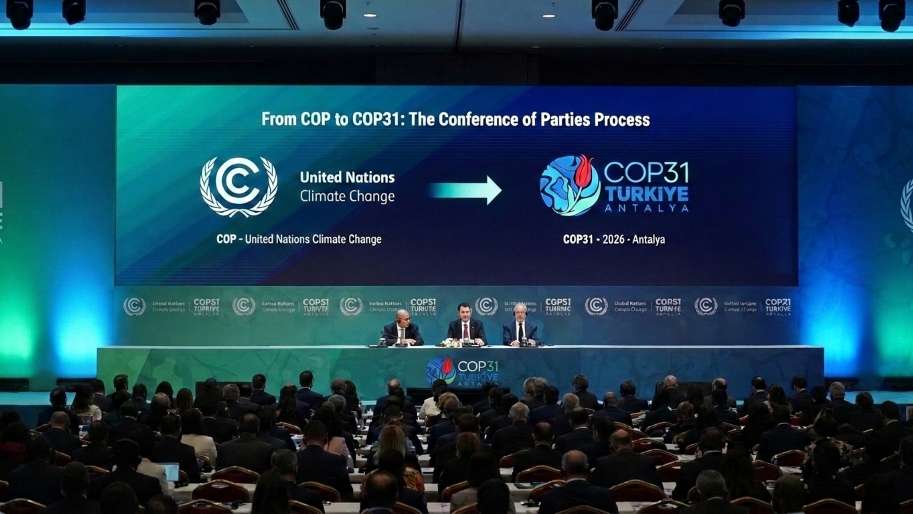
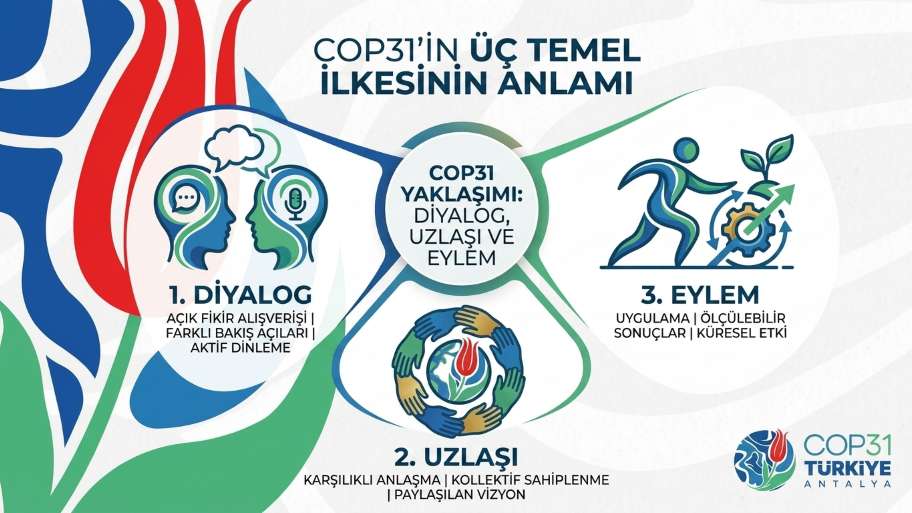
What Do the Three Principles of COP31 Mean? This question shows that the COP31 process, which will be held in Antalya, is not only about climate negotiations but also represents a new approach to how global climate diplomacy is conducted. COP31, which will take place as an international climate conference in Antalya between 9–20 November 2026, aims to bring the need for collective action against the climate crisis to the forefront. Shaped by the vision of the “COP of the Future,” this process is built on three fundamental principles: Dialogue, Consensus, and Action.
These three principles are not considered independent concepts but rather a roadmap that complements each other. While Dialogue enables different perspectives and needs to come together on a common ground, Consensus supports the emergence of a shared sense of responsibility through this communication process. Action represents the transformation of this shared commitment into concrete practices, projects, and measurable outcomes.
Climate change is now considered not only an environmental issue but also a global challenge with economic, social, technological, and political dimensions. Therefore, the decisions of countries alone are not sufficient to develop lasting solutions. Scientists, the private sector, local governments, youth, civil society organizations, and different segments of society need to be included in the process. The three principles of COP31 form the foundation of this broad and inclusive approach.
Within the COP31 process hosted by Türkiye, these principles are addressed with an understanding that aims to build trust in climate diplomacy, unite the priorities of different countries around common goals, and transform commitments into real-world actions.
The Role of Dialogue, Consensus, and Action Principles in the COP31 Vision
Within the COP31 vision, the principles of Dialogue, Consensus, and Action represent the fundamental approaches designed to make climate negotiations more inclusive and result-oriented. The impacts of the climate crisis are experienced differently across various regions of the world. While some countries struggle with drought and water scarcity, others face extreme weather events, rising sea levels, or economic losses.
These differences make it necessary to develop a common understanding when creating climate policies. Since every country has different economic capacities, energy structures, and climate risks, mutual understanding plays a crucial role in solution processes. This is where Dialogue, the first stage of COP31, becomes essential.
Dialogue does not simply mean exchanging ideas. It also means understanding different perspectives, recognizing needs, and building trust-based relationships. Genuine Consensus cannot be achieved without establishing a strong dialogue environment.
Consensus represents the common area of action that naturally emerges from this communication process. It enables countries, institutions, and different stakeholders to work together toward global climate goals while maintaining their own priorities.
Action represents the implementation stage of this entire process. Climate goals must not remain only in declarations or international agreements; they must create real impacts in everyday life. Therefore, within the COP31 approach, Action is considered the most important factor determining the credibility of commitments.
Dialogue: The First Step Toward Rebuilding Trust
The principle of Dialogue is one of the fundamental pillars of the COP31 process. To develop global solutions for the climate crisis, the voices of different groups must first be heard. Strong communication between developed countries, developing countries, vulnerable communities, local governments, youth, and civil society organizations contributes to creating more balanced climate policies.
One of the most important issues in climate negotiations throughout history has been the difference in responsibilities and capacities among countries. While some countries have historically had higher emissions, others experience the impacts of climate change more intensely. Therefore, all perspectives must be considered in order to establish a fair climate approach.
The principle of Dialogue becomes particularly important at this point. Climate policies cannot be shaped only through technical or economic decisions. Social realities, local needs, and the expectations of different communities must also be included in the process.
Within COP31, the understanding of Dialogue aims to create a more inclusive, transparent, and participatory climate diplomacy approach. This approach helps strengthen trust in climate negotiations.
Without trust, it is extremely difficult for countries to agree on long-term goals and develop joint projects. Therefore, Dialogue is not only the first step but also a fundamental element that ensures the continuity of the entire climate process.
The Importance of the Dialogue Principle in Terms of Social Participation
Decisions made only by governments are not sufficient in the fight against climate change. The participation of different segments of society in the process increases the effectiveness and applicability of these decisions.
The role of young people in climate policies, the implementation capacity of local governments, and the field experience of civil society organizations contribute to the development of more effective solutions. The Dialogue approach of COP31 supports making these different actors more visible within climate diplomacy.
The experiences of communities directly affected by climate change are particularly important for policy development processes. Transferring local challenges to international decision-making mechanisms helps create more realistic and applicable solutions.
Therefore, Dialogue is not only a process consisting of meetings or official discussions. It is also a process of knowledge sharing, experience exchange, and building a common understanding among different groups.
Consensus: A Foundation for Shared Responsibility and Global Cooperation
The principle of Consensus represents the second fundamental stage of the COP31 approach. The understanding created through Dialogue can only transform into shared responsibility through Consensus.
Countries may have different goals regarding climate change. Energy policies, economic conditions, and technological opportunities are not at the same level in every country. Therefore, it cannot be expected that everyone will follow the same methods to achieve global climate goals.
The Consensus approach aims to enable countries with different conditions to move forward toward common goals. The main purpose is not to eliminate differences but to create common areas of solutions among these differences.
Addressing energy security and climate goals together during the COP31 process is one of the important examples of the Consensus approach. For the green transition to succeed, economic realities and environmental objectives must be evaluated in a balanced way.
Consensus is also the foundation for building long-term trust in climate action. Partnerships developed between countries strengthen not only diplomatic relations but also technology sharing, financial cooperation, and joint projects.
Türkiye-Australia Partnership as a Concrete Example of the Consensus Approach
One of the most important reflections of the Consensus principle within the COP31 process is the development of cooperation between countries from different regions with different priorities around shared climate goals. The partnership approach between Türkiye and Australia represents an important example of how different perspectives can come together on common ground in climate diplomacy.
Since climate change is a global challenge, no country can create solutions alone. Developing technology sharing, knowledge transfer, financial cooperation, and joint projects between countries accelerates progress toward climate goals. The principle of Consensus is built precisely on this understanding.
The cooperation of countries such as Türkiye and Australia, which have different geographical characteristics, economic structures, and energy resources, around common goals demonstrates the importance of an inclusive approach in climate diplomacy. Such collaborations allow countries to contribute to global climate objectives while maintaining their own conditions and priorities.
The understanding of Consensus should not only be established between countries but also among public institutions, the private sector, academic organizations, and civil society. Climate transformation is a long-term process that requires contributions from all segments of society.
For this reason, within the COP31 approach, Consensus is considered not only as a point of diplomatic agreement but also as the development of a culture of creating shared solutions.
Action: Turning Commitments into Real Results on the Ground
Action, which is the most important complementary stage among the three principles of COP31, refers to transforming the shared will created through Dialogue and Consensus into real-world implementation. For climate efforts to succeed, commitments, targets, and plans must be supported by concrete steps.
One of the biggest challenges in climate policies is that sufficient progress is not always achieved during implementation despite the establishment of targets. Therefore, within the COP31 vision, the principle of Action is considered the key element determining the credibility of commitments.
A country or institution announcing a climate target is an important first step; however, the real value emerges when these targets are transformed into applicable projects. Renewable energy investments, energy efficiency initiatives, sustainable transportation systems, waste management projects, and practices aimed at protecting natural resources represent the practical reflections of the Action principle.
Within the COP31 approach, Action does not only mean achieving environmental targets. It also represents a comprehensive transformation process that creates economic opportunities, supports new technologies, and increases societies’ capacity to adapt to climate change.
At this point, the understanding that “a commitment is a declaration of intention, while implementation is trust” carries great importance. Because in climate diplomacy, trust is directly related to the extent to which promises are put into practice.
The Climate Action Bridge: Moving from Science to Implementation
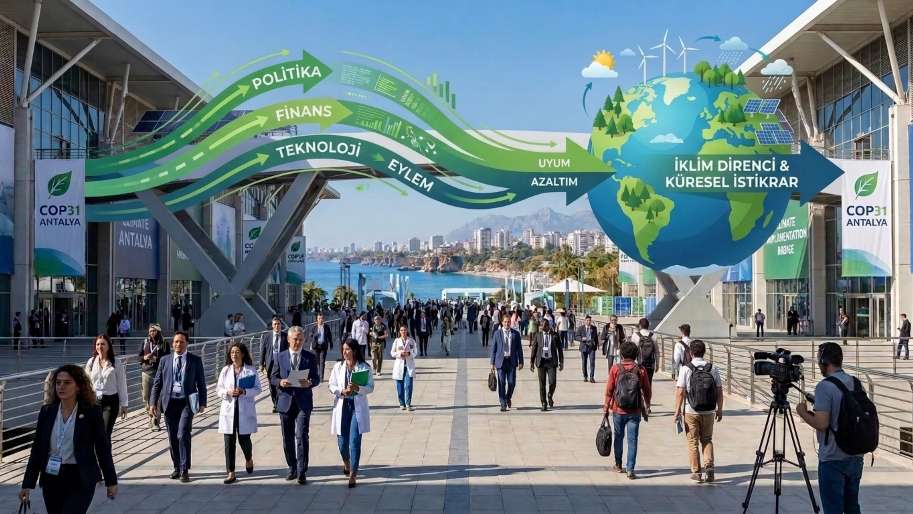
The Climate Action Bridge, considered one of the important tools of the Action principle within the COP31 process, represents an approach aimed at facilitating the transition of climate goals into practical implementation.
Setting climate targets alone is not enough in the fight against climate change. Achieving these targets requires directing financial resources effectively, developing applicable projects, and ensuring that different stakeholders act together within the same process.
The Climate Action Bridge aims to establish a connection between national climate targets and implementation on the ground. Supporting investable projects, increasing technical capacity, and using climate finance more effectively are among the important elements of this approach.
Access to financing is one of the most critical issues of climate transformation, especially for developing countries. Strengthening access to technology, knowledge, and financial resources enables climate targets to be implemented more rapidly.
Therefore, the principle of Action is not seen only as the responsibility of governments; it is considered a shared process that requires cooperation among financial institutions, the private sector, academia, and society.
Zero Waste Movement: The Reflection of the Action Principle in Türkiye
One of the important examples of the Action approach within the three principles of COP31 is the Zero Waste Movement in Türkiye. This approach, which focuses on reducing waste, using resources efficiently, and improving recycling processes, demonstrates how environmental goals can be transformed into practical applications in daily life.
The Zero Waste approach is not only a project aimed at reducing the amount of waste. It is also a comprehensive transformation model that includes changing consumption habits, protecting resources, and developing sustainable production methods.
This movement demonstrates that responsibility in the fight against climate change can be taken at different levels, from individuals to institutions. Because achieving climate goals requires not only large-scale investments but also small yet continuous changes in everyday life.
The fundamental message of the Action principle becomes clear at this point: Climate goals should not remain only in documents or conference outcomes; they must be transformed into real practices across different areas of society and the economy.
The Point Where the Three COP31 Principles Meet: From Antalya to the Global Climate Future
The three principles of COP31 — Dialogue, Consensus, and Action — are considered not as separate processes but as a transformation model that complements each other. Dialogue enables different parties to understand one another. Consensus creates shared responsibility. Action makes it possible for this shared responsibility to become real results.
COP31, which will be held in Antalya, will serve as an important platform where these three principles are implemented on a global scale. Bringing together representatives from different countries, scientists, private sector representatives, and civil society organizations will contribute to developing new forms of cooperation in climate diplomacy.
This process hosted by Türkiye also emphasizes the importance of collective action against climate change. The fact that the Anatolian region has historically been a center where different cultures have lived together is considered a symbolic reflection of the understanding of Dialogue and Consensus.
The success of COP31 will not only be measured by the decisions taken but also by how effectively these decisions are implemented. Therefore, the Action stage will be one of the most important factors determining the post-conference process.
As the impacts of the climate crisis become increasingly visible, collective action among countries is no longer a choice but a necessity. The three principles of COP31 present an inclusive and implementation-oriented approach that responds to this necessity.
Why Are the Three Principles of COP31 Important for Global Climate Cooperation?
The three principles of COP31 demonstrate that climate diplomacy is not only composed of negotiation processes but is also a system built on trust, shared responsibility, and implementation. Through Dialogue, different perspectives come together; through Consensus, common goals are established; and through Action, these goals are transformed into real solutions.
This approach aims to create a more balanced and inclusive model in the fight against climate change. The climate policies of the future will be shaped not only by technical solutions but also by strong communication, cooperation, and determined implementation.
What Are the Expected Impacts During the Antalya COP31 Process?
COP31, which will be held in Antalya, will be an important process demonstrating how the principles of Dialogue, Consensus, and Action will be reflected in the global climate agenda. The successful implementation of these three principles can contribute to stronger cooperation between countries, more effective use of climate finance, and faster development of sustainable solutions.
The main goal of COP31 is to transform commitments made in the fight against climate change into concrete results and establish a stronger common foundation for future climate policies. This approach, moving from Dialogue to Consensus and from Consensus to Action, provides an important roadmap for a fairer and more sustainable global climate future.