MR-23 · Sümela
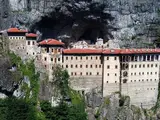
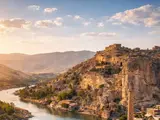
Built into the steep cliffs of Karadağ, overlooking Altındere Valley in the Maçka district of Trabzon, Sümela Manastırı is one of the most important historical and cultural landmarks of the Eastern Black Sea Region.
Situated on a steep slope approximately 300 metres above the valley and surrounded by forests, the monastery is remarkable for its architecture, which blends into the natural landscape. Also known locally as Meryem Ana Manastırı (Monastery of the Virgin Mary), it is believed to have been founded in the late 4th century, during the reign of Byzantine Emperor Theodosius I, by two monks named Barnabas and Sophronios, who came from Athens. According to legend, the two monks discovered an icon believed to belong to the Virgin Mary and established the first place of worship inside the rock. The name Sümela is thought to derive from the Greek word melas, meaning “black”, or from the former name of Karadağ.
Over the centuries, Sümela Manastırı was expanded during different periods and developed into a large monastic complex with additional buildings. It is known to have been restored during the reign of Byzantine Emperor Justinian I in the 6th century and gained particular importance under the Komnenos dynasty of Trabzon. Its development continued from the 13th century onwards. Supported by imperial decrees issued during the reign of Alexios III, the monastery became one of the region’s important religious centres. Its existence and certain rights were also preserved during the Ottoman period. Various sections were renovated in the 18th century, and new buildings were added in the 19th century, when the monastery reached its greatest extent. Abandoned after 1923, it has survived as an important heritage site bearing traces of different cultures and beliefs throughout history.
The monastery’s architecture features a multi-section layout adapted to the rocky terrain. Its main rock church, chapels, monks’ rooms, student rooms, guesthouse, kitchen, library and sacred spring are the principal parts of the complex. The historic aqueducts and long stairways leading to the monastery are also among its notable features. The frescoes decorating the walls of the main rock church and chapels are particularly important to Sümela’s artistic heritage. These paintings depict scenes from the Bible, the lives of Jesus Christ and the Virgin Mary, saints and other religious narratives. Created in different periods, the frescoes provide valuable insight into the development of Byzantine and Eastern Christian art in the region.
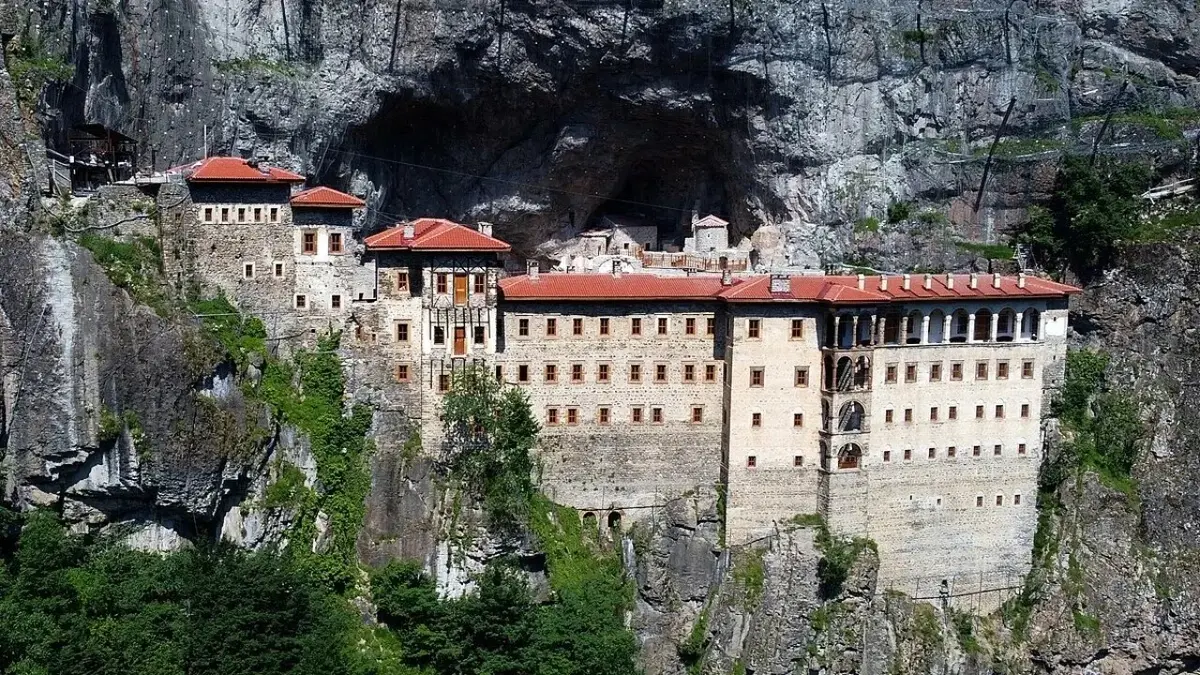
One of the features that makes Sümela Manastırı exceptional is the striking combination of architecture created by human hands and the natural landscape of the Black Sea Region. Rising among deep valleys, dense forests, towering cliffs and the natural beauty of Altındere, the monastery has served as an important centre of faith and pilgrimage for centuries. Holding a significant place in Trabzon’s historical identity, Sümela is more than a religious building; through its architecture, works of art and history, it brings together the cultural heritage of different periods. It has been included on the UNESCO World Heritage Tentative List since 2000.
Official sources+
Source titles are given in their original language.
- UNESCO Dünya Miras Merkezi – Sümela Manastırı (Geçici Liste)
- Trabzon İl Kültür ve Turizm Müdürlüğü – Sümela (Meryem Ana) Manastırı
- T.C. Kültür ve Turizm Bakanlığı, Kültür Varlıkları ve Müzeler Genel Müdürlüğü – Sümela Manastırı (Trabzon)
- T.C. Kültür ve Turizm Bakanlığı, Türkiye Kültür Portalı – Meryem Ana (Sümela) Manastırı
- T.C. Kültür ve Turizm Bakanlığı, Türkiye Müzeleri – Sümela Manastırı