MR-21 · Çatalhöyük
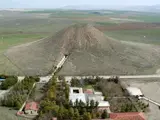
Located on the Konya Plain, near the Çumra district of Konya, Çatalhöyük is one of the most important archaeological sites for understanding humanity’s transition to settled life.
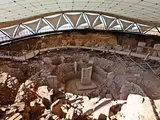
Dating back approximately 9,400 years, the settlement bears witness to the Neolithic Period, when hunter-gatherer communities developed new ways of life based on agriculture and animal husbandry. Çatalhöyük consists of two closely situated mounds. The Eastern Mound, dated between 7400 and 6200 BCE, contains 18 identified settlement layers. The Western Mound, dated between 6200 and 5200 BCE, preserves traces of the later Chalcolithic Period. More than two thousand years of continuous settlement in the same area reveal how human communities organised themselves over time, developed new ways of producing food and established permanent settlements.
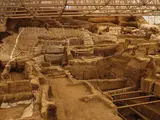
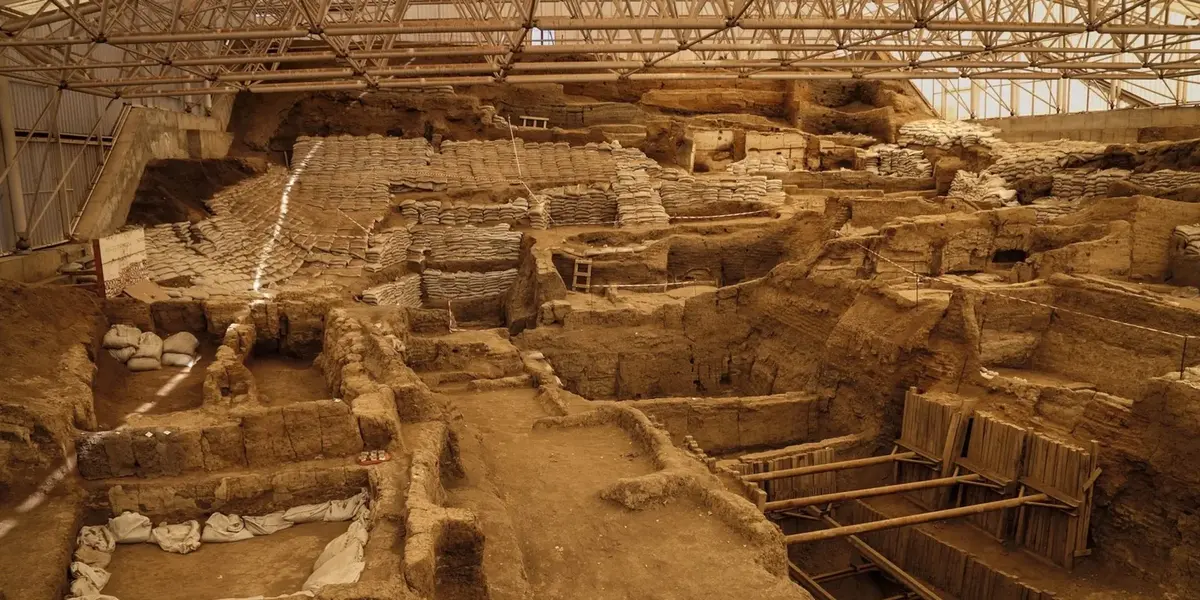
One of Çatalhöyük’s most remarkable features is its distinctive architectural layout. Houses were built directly next to one another, with no conventional streets between them. The entrances to the houses were located on the roofs, and people entered the buildings using ladders through openings in the ceilings. The rooftops also served as shared spaces where neighbours could move between houses and carry out everyday activities. Most houses were built of mudbrick, with hearths, ovens, seating platforms and storage areas inside. This arrangement reflects a distinctive settlement pattern in which community life was organised around shared spaces. The burial of the dead beneath the floors of houses also shows how family life, connections with ancestors and beliefs about death were closely intertwined with everyday life.
The people of Çatalhöyük not only met their needs for shelter and food but also developed a rich world of art and symbolism. The walls of houses feature hunting scenes, animal figures, geometric patterns and various depictions. Reliefs, figurines and, in particular, Mother Goddess figurines offer insights into the beliefs and symbolic forms of expression of the period. However, the meanings of these figures and their role in social life remain subjects of archaeological research. Obsidian tools, stone craftsmanship and materials brought from different regions indicate that the people of Çatalhöyük maintained connections with neighbouring settlements and participated in trade networks. Agriculture, animal husbandry, hunting and handicrafts were among the main elements of the community’s economic life. Discovered in 1958, Çatalhöyük was first excavated by James Mellaart, with research continuing in later years through the work of various international teams. These excavations have provided important information not only about architectural remains but also about people’s diets, production activities, artistic practices and social relationships. Çatalhöyük is regarded as one of the fundamental sites in world archaeology for understanding the development of settled life, early social organisation and the first examples of urban culture. In recognition of its outstanding universal cultural value, it was inscribed on the UNESCO World Heritage List in 2012.
Official sources+
Source titles are given in their original language.
- UNESCO Dünya Miras Merkezi – Çatalhöyük Neolitik Alanı
- T.C. Kültür ve Turizm Bakanlığı, Kültür Varlıkları ve Müzeler Genel Müdürlüğü – Çatalhöyük Neolitik
- Alanı (Konya)
- T.C. Kültür ve Turizm Bakanlığı – Çatalhöyük
- T.C. Kültür ve Turizm Bakanlığı, Türkiye Kültür Portalı – Çatalhöyük Neolitik Kenti
- T.C. Kültür ve Turizm Bakanlığı, Türkiye Müzeleri – Çatalhöyük Örenyeri