MR-17 · Efes
Located in the Selçuk district of İzmir, Efes is one of the ancient world’s most important port cities and cultural centres. With a history dating back to prehistoric times, the city experienced significant growth, particularly during the Hellenistic and Roman periods.
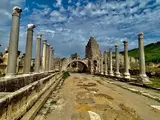
As the capital of the Roman province of Asia, it attained an important political, economic and cultural position. Thanks to its harbour, Efes was connected to the trade routes of the Mediterranean and Aegean worlds, becoming a vibrant city where merchants, thinkers, artists and visitors from different regions came together. Its broad streets, squares, fountains and monumental structures continue to reveal the sophistication of urban life in antiquity.
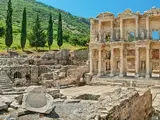
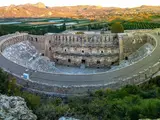
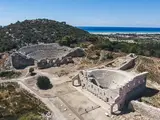
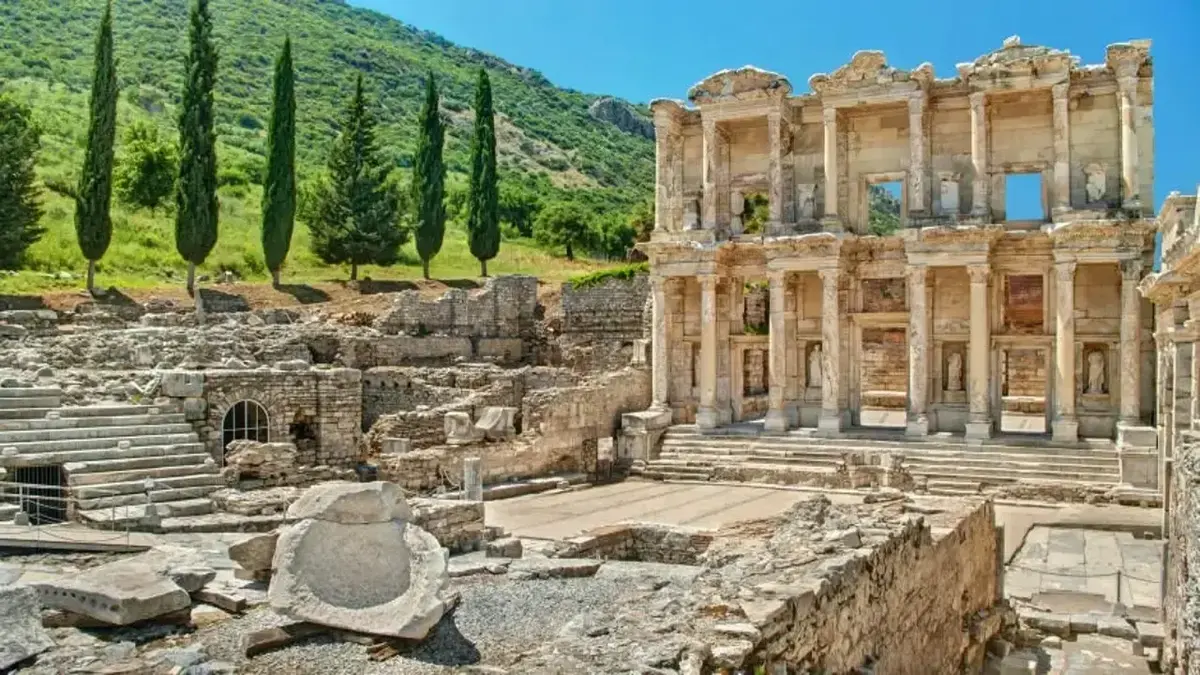
The Celsus Kütüphanesi, one of Efes’s most renowned structures, is among the city’s defining landmarks, with an impressive façade reflecting the architectural elegance of the Roman period. Commissioned by the son of the Roman governor Celsus in the 2nd century CE in his father’s honour, the building became one of the important centres of knowledge of its time. With a capacity of approximately 25,000 people, the Büyük Tiyatro served not only as a venue for performances but also as a place for public gatherings and important speeches. The monuments lining Mermer Cadde and Kuretler Caddesi, Hadrian Tapınağı, Trajan Çeşmesi and the Yamaç Evler, renowned for their mosaics, reflect the rich architectural and social life of Efes. Located near the city, Artemis Tapınağı was counted among the Seven Wonders of the Ancient World and was one of the most important sacred centres of its time.
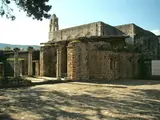
Efes was an important centre not only of Roman civilisation but also of religious history. Aziz Pavlus is known to have lived and preached in the city, while the basilica associated with Aziz Yuhanna and Meryem Ana Evi hold a special place in the Christian world. The Council held in the city in 431 was also among the significant events in early Christian history. Bearing the traces of different civilisations over many centuries, Efes today offers insight into the life of an ancient metropolis through its libraries, theatre, temples, residences and sacred sites. Efes was inscribed on the UNESCO World Heritage List in 2015.
Official sources+
Source titles are given in their original language.
- UNESCO Dünya Miras Merkezi – Efes
- T.C. Kültür ve Turizm Bakanlığı, Kültür Varlıkları ve Müzeler Genel Müdürlüğü – Efes (İzmir)
- T.C. Kültür ve Turizm Bakanlığı – Efes
- T.C. Kültür ve Turizm Bakanlığı, Türkiye Müzeleri – Efes Örenyeri
- T.C. Kültür ve Turizm Bakanlığı, Türkiye Kültür Portalı – Celsus Kütüphanesi