PRESS-2 · Yunus Emre
“Let us love and be loved, for this world belongs to no one forever.”
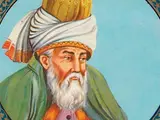
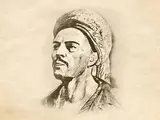
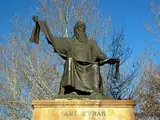
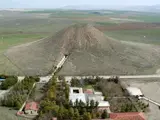
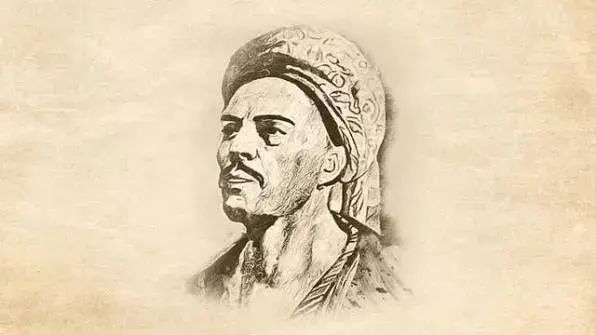
Yunus Emre was one of the most important poets of Turkish Sufi literature. He lived in Anatolia from the second half of the 13th century to the early 14th century. Although details of his life are uncertain, he is associated with the Sarıköy area of Eskişehir. During a period of political and social turmoil in Anatolia, his poems conveyed messages of love, tolerance, humility and unity.
What makes Yunus Emre distinctive is his ability to express profound Sufi ideas in simple, heartfelt Turkish that ordinary people could understand. His poems explore love for humanity, devotion to God, the temporary nature of the world and the importance of understanding one’s inner self. In his view, a person’s worth is measured not by their position or wealth, but by the goodness of their heart. For this reason, his poetry has spoken to the shared feelings of different generations for centuries.
His principal works that have survived to the present day are Divan and Risâletü’n-Nushiyye. While Divan brings together his hymns and Sufi poems, Risâletü’n-Nushiyye offers guidance on spiritual maturity. His poetry spread across a wide geographical area, from Anatolia to the Balkans, making a significant contribution to the development of Turkish as a language of literature and thought. Even centuries later, Yunus Emre continues to be a universal voice calling humanity towards love, understanding and unity of heart.
Official sources+
Source titles are given in their original language.
- TDV İslâm Ansiklopedisi – Yunus Emre
- Yunus Emre Enstitüsü – Yunus Emre: Hayatı, Eserleri ve Felsefesi
- Eskişehir Büyükşehir Belediyesi – Uluslararası Yunus Emre Edebiyat Şenliği