SE-4 · Âşık Veysel
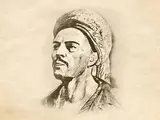
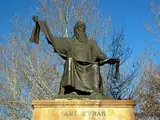
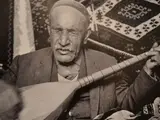
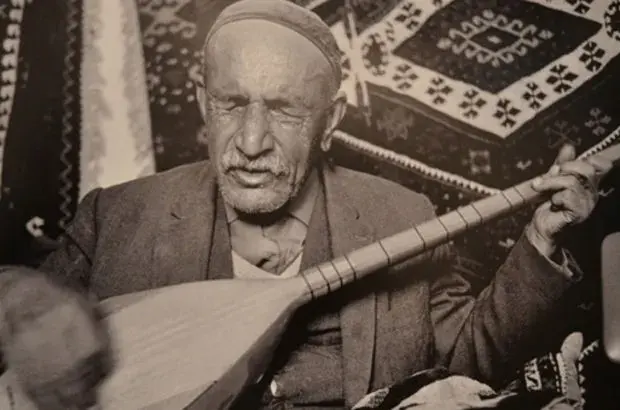
Âşık Veysel Şatıroğlu was born in 1894 in Sivrialan village, in the Şarkışla district of Sivas. At the age of seven, he lost sight in one eye due to smallpox and later lost sight in the other eye following an accident.
The saz (a traditional Turkish stringed instrument) that his father bought for him to keep him occupied became the most important part of his life. His musical journey, which began at an early age, gradually grew into a powerful folk poetry tradition that reached every corner of Anatolia.
An important turning point in Âşık Veysel’s artistic life was his meeting with the folk poet and researcher Ahmet Kutsi Tecer. He began to gain wider recognition after taking part in the Âşıklar Bayramı (Festival of Minstrels), held in Sivas in 1931. He travelled across Anatolia with his saz and poetry and, for a time, taught the saz at village institutes. In simple Turkish, his poems explored love for humanity, nature, the land, life, death and the human journey through the world.
Remembered for the lines “Uzun ince bir yoldayım, gidiyorum gündüz gece” (“I am on a long, narrow road; I travel day and night”), Âşık Veysel brought the tradition of folk poetry together with the ideas of his own time. His best-known works include Dostlar Beni Hatırlasın, Sazımdan Sesler and Deyişler. He passed away on 21 March 1973 in Sivrialan, the village where he was born. His home is now open to visitors as the Âşık Veysel Museum. The folk songs and poems he left behind continue to express the way the people of Anatolia view the world, nature and humanity.
Official sources+
Source titles are given in their original language.
- TDV İslâm Ansiklopedisi – Âşık Veysel
- T.C. Kültür ve Turizm Bakanlığı – Âşık Veysel Şatıroğlu